
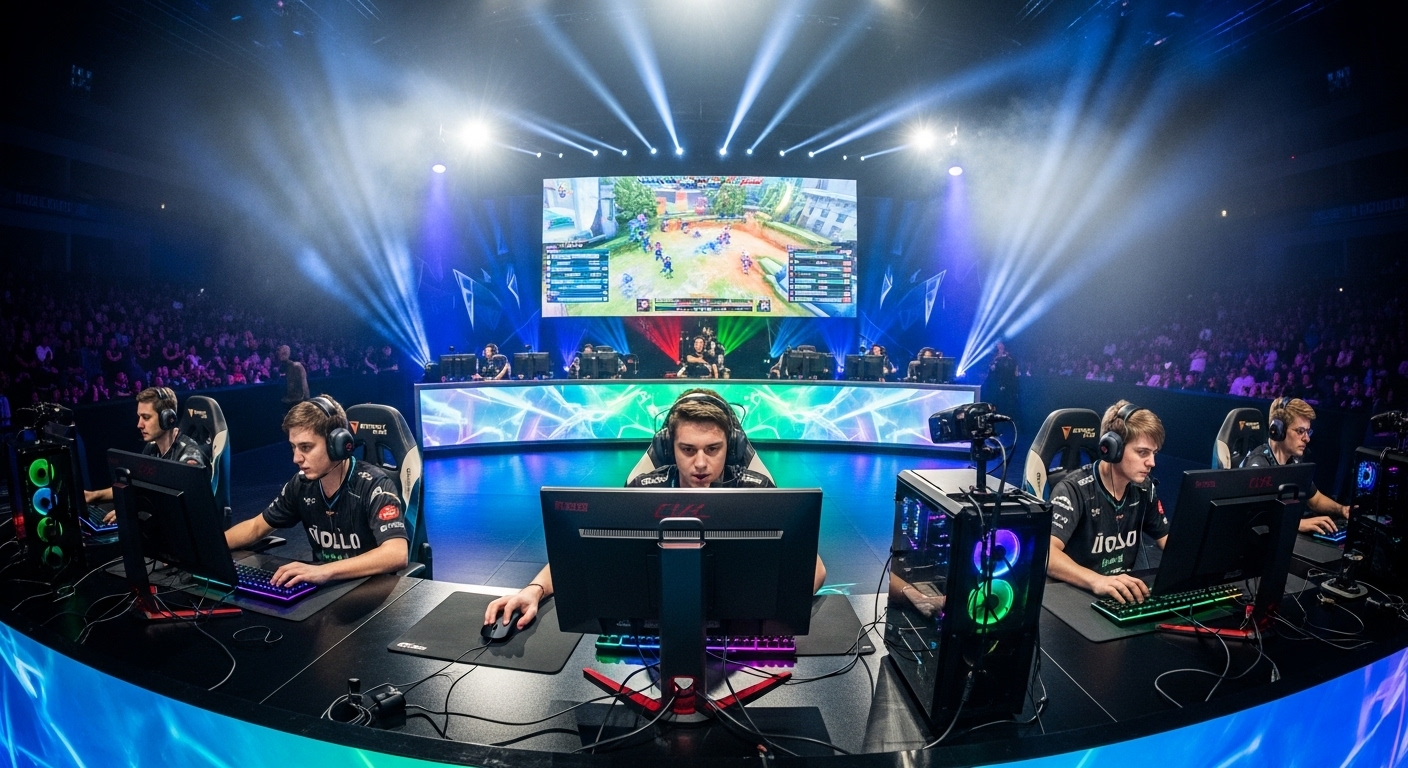
Introduction: The Rise of a New Kind of Sport
Not too long ago, the idea of calling video games a “sport” would have drawn laughs. Gaming was seen as a pastime, something confined to bedrooms, arcades, and online forums. But today, Esports—short for electronic sports—has evolved into a billion-dollar global industry with packed stadiums, professional athletes, team franchises, sponsorship deals, and millions of devoted fans.
The digital arena has become the new battleground for skill, strategy, and fame. It’s no longer just about fun—it’s about legacy, discipline, and a culture that unites gamers around the world.
The Origins of Esports
The roots of Esports stretch back further than most realize. The first organized gaming competition is often traced to 1972 at Stanford University, where students competed in the game Spacewar! for a year’s subscription to Rolling Stone magazine.
By the 1980s, arcades became the heart of competitive gaming. Titles like Pac-Man, Donkey Kong, and Space Invaders fueled high-score rivalries. The 1990 Nintendo World Championships took the idea global, traveling across multiple U.S. cities and introducing the concept of competitive gaming as a mainstream event.
Then came the 1990s—a golden era for Esports foundations. The rise of PC gaming and internet connectivity made it possible for players to face off without being in the same room. Games like Quake, StarCraft, and Counter-Strike began shaping the early structure of professional competition. LAN parties and tournaments set the stage for what would later become a thriving ecosystem of leagues, sponsorships, and streaming platforms.
The Explosion of Competitive Gaming
The 2000s marked a turning point. With better internet speeds, gaming moved from local setups to online communities. South Korea, in particular, became a hub of Esports innovation. StarCraft: Brood War turned ordinary gamers into celebrities. Television channels began broadcasting matches, and professional teams emerged with corporate sponsorships.
Western countries soon caught up. Organizations like Major League Gaming (MLG) and Electronic Sports League (ESL) helped formalize the structure. Games like Halo, Call of Duty, Counter-Strike 1.6, and Warcraft III built loyal audiences. By 2010, tournaments began offering six-figure prizes, drawing players from across continents.
Esports wasn’t just about the games anymore—it became an ecosystem. Developers started designing games with competition in mind. Spectator modes, ranking systems, and tournament tools became essential parts of the experience.
The Power of Streaming Platforms
The explosion of streaming services in the 2010s completely transformed the Esports landscape. Platforms like Twitch and YouTube Gaming turned competitive play into spectator entertainment. Gamers could now broadcast their matches live, interact with fans, and build personal brands.
This direct connection between players and viewers redefined what it meant to be a professional gamer. No longer did players rely solely on tournaments for income; streaming revenue, donations, and sponsorship deals became major income sources.
At the same time, fans began consuming Esports the way people watch traditional sports—analyzing plays, debating strategies, and forming emotional attachments to teams and personalities.
Streaming also democratized Esports. Anyone with talent and an internet connection could showcase their skills to a global audience. It was no longer necessary to live near a tournament hub; Esports became borderless.
Major Titles that Defined Esports
The Esports world is built around specific games that became cornerstones of competition. Each genre brings its own culture, fan base, and gameplay depth.
1. Multiplayer Online Battle Arenas (MOBAs)
Games like League of Legends and Dota 2 dominate the Esports scene. These complex team-based games require deep strategy, coordination, and near-perfect execution. Their world championships attract tens of millions of viewers, with production values rivaling major sporting events.
The Dota 2 International is famous for offering record-breaking prize pools—sometimes exceeding $30 million. Meanwhile, the League of Legends World Championship is a global spectacle, often held in sold-out stadiums across continents.
2. First-Person Shooters (FPS)
The FPS genre has been a backbone of Esports for decades. From Counter-Strike to Call of Duty, Valorant, and Overwatch, these games combine precision, reflexes, and teamwork.
Counter-Strike: Global Offensive (CS:GO) has built an enduring legacy with consistent tournaments and loyal teams. Valorant brought a new layer of style and strategy, blending traditional shooting mechanics with hero-based abilities.
3. Battle Royale Games
The mid-2010s introduced a new phenomenon: battle royale. Titles like Fortnite, PUBG, and Apex Legends made survival and last-man-standing gameplay a global craze.
Fortnite, with its accessible mechanics and pop-culture collaborations, became both a competitive and cultural icon. Its World Cup offered millions in prizes and showcased young talent to massive audiences.
4. Sports Simulations and Fighting Games
While MOBAs and FPS titles dominate headlines, traditional sports simulations and fighting games hold a strong niche. Games like FIFA, NBA 2K, Tekken, and Street Fighter have passionate Esports communities.
These games mirror real-world sports and martial arts, bridging the gap between physical and digital competition.
Professional Players and the New Athlete
The modern Esports athlete trains as seriously as a traditional sports professional. Daily routines include mechanical drills, strategic analysis, physical workouts, and mental health sessions. Teams employ coaches, nutritionists, analysts, and psychologists to ensure peak performance.
Unlike the stereotype of a gamer glued to a screen, today’s top players balance rigorous schedules with physical fitness and mindfulness training. Reaction times, hand-eye coordination, and decision-making speed are honed to milliseconds.
For many, Esports offers not just fame but a full-time career. Salaries, endorsements, and tournament winnings can reach into six or even seven figures annually.
Still, the pressure is intense. Competition is fierce, and careers are often short due to burnout or shifts in the game’s meta. The average professional gamer’s prime years may last only a few seasons before younger, faster players rise.
Esports Organizations and Team Culture
The structure of Esports mirrors that of traditional sports leagues. Professional organizations own teams across different games, complete with branding, sponsors, and fan bases.
Teams like Team Liquid, Fnatic, Cloud9, G2 Esports, and T1 are household names in the gaming world. They operate like corporations—recruiting players, training in high-end facilities, and managing marketing campaigns.
Team houses have become the new training grounds. Players live together, practice for hours daily, and build synergy essential for victory. These environments foster teamwork but also demand emotional resilience.
Franchised leagues, like the Overwatch League and League of Legends Championship Series (LCS), take this professionalism to another level, resembling the NBA or Premier League in structure.
The Role of Fans and Community
Fans are the heartbeat of Esports. They drive viewership, fuel sponsorships, and create the culture that surrounds competitive gaming. Online forums, social media, and fan-made content form vibrant ecosystems that amplify every tournament.
Cosplay, fan art, memes, and analysis videos are common expressions of passion. Many fans follow their favorite teams year-round, attending live events, buying merchandise, and supporting players through online streams.
The sense of community is deeply personal. Unlike traditional sports, where players often feel distant, Esports athletes engage directly with fans through chat, social platforms, and behind-the-scenes content.
This accessibility builds a unique kind of loyalty—one grounded not just in performance, but in shared culture and communication.
Esports and Education
A surprising development in recent years has been the integration of Esports into educational systems. Universities and high schools across the world now offer Esports scholarships and programs.
These initiatives recognize gaming as a legitimate discipline involving teamwork, leadership, strategic thinking, and digital literacy.
Courses cover everything from game design and broadcasting to sports psychology and event management. The aim is to prepare students for careers not just as players but as analysts, coaches, and industry professionals.
This educational integration signals a broader acceptance: gaming is no longer a distraction—it’s a path to opportunity.
The Business of Esports
Behind the glamour of tournaments lies a massive business machine. The Esports economy is powered by multiple revenue streams—advertising, media rights, sponsorships, merchandise, and ticket sales.
Big brands from energy drinks to tech companies have poured resources into the scene. Esports tournaments now command prime-time coverage, and production values rival Hollywood shows.
Event organizers build multi-million-dollar venues, and governments in Asia and Europe have started recognizing Esports as official sports.
Yet, challenges remain. The industry is still finding stable business models, balancing player compensation, and navigating the complexities of broadcasting rights. The rapid growth has led to fierce competition among organizations, sometimes outpacing regulation and standardization.
Esports and Technology: The Perfect Synergy
Esports couldn’t exist without technology, and technology continues to evolve alongside it. High-performance PCs, low-latency networks, and advanced peripherals shape every player’s experience.
The rise of virtual reality (VR) and augmented reality (AR) promises to change the way games are played and viewed. Spectators may soon immerse themselves directly into matches through VR arenas.
Artificial intelligence (AI) also plays a role in training analysis, helping players identify weaknesses and optimize performance.
As cloud gaming expands, accessibility will increase—allowing more players to compete without expensive setups. The blend of tech and competition keeps Esports at the cutting edge of entertainment innovation.
Cultural Impact of Esports
Esports has become more than just a competition—it’s a cultural movement. It’s reshaping entertainment, storytelling, and identity for younger generations.
Gaming influencers have become celebrities, shaping trends and social conversations. Esports events are now featured on mainstream networks, and collaborations with music, film, and fashion are common.
The boundaries between virtual and real worlds are blurring. Virtual concerts inside games, custom team skins, and cinematic trailers bring creativity to new heights.
For many, Esports is a symbol of empowerment—a space where anyone, regardless of background, can rise based on skill, passion, and perseverance.
Challenges and Criticisms
Despite its growth, Esports faces obstacles that must be addressed for sustainable progress.
1. Player Health and Burnout
The lifestyle of constant practice, travel, and pressure takes a toll. Mental health issues and burnout are frequent, and retirement often comes early. The industry is gradually improving support systems, but more emphasis on well-being is needed.
2. Gender Representation
While Esports welcomes players of all kinds, female representation at the top competitive levels remains limited. Cultural biases and lack of support continue to be challenges. However, initiatives promoting inclusivity are gaining momentum.
3. Cheating and Integrity
With huge money on the line, Esports has had to battle cheating, match-fixing, and doping scandals. The introduction of anti-cheat software, strict regulations, and player education are steps toward maintaining integrity.
4. Industry Sustainability
Esports relies heavily on sponsorships and hype. Developing long-term profitability and stability for teams, players, and organizers remains an ongoing challenge.
The Future of Esports
The future of Esports looks boundless. As technology, infrastructure, and social acceptance grow, Esports could easily rival or even surpass traditional sports in audience size and cultural influence.
The lines between gaming, entertainment, and sports will continue to blur. Hybrid experiences—mixing live concerts, cinematic storytelling, and competitive play—will define the next era of digital entertainment.
Additionally, the expansion of mobile gaming, particularly in Asia, is creating new opportunities. Games like Mobile Legends, PUBG Mobile, and Free Fire are turning smartphones into competitive platforms accessible to billions.
Governments are also recognizing Esports as a legitimate career path, investing in training facilities and national teams. The possibility of Esports entering future Olympic discussions no longer feels far-fetched.
Conclusion: The Spirit of the Digital Generation
Esports is not a passing trend—it’s the evolution of competition itself. It represents how technology, creativity, and human ambition merge into something unprecedented.
In a world driven by pixels and passion, Esports stands as proof that the arena of sports has expanded beyond physical fields and stadiums. The next generation of champions will not just run faster or jump higher—they will think quicker, react sharper, and connect deeper across the digital divide.
From humble LAN rooms to global arenas, Esports has become the new frontier of human achievement, uniting millions under one electrifying truth: competition, no matter the form, will always find its way to the heart of those who dare to play.