
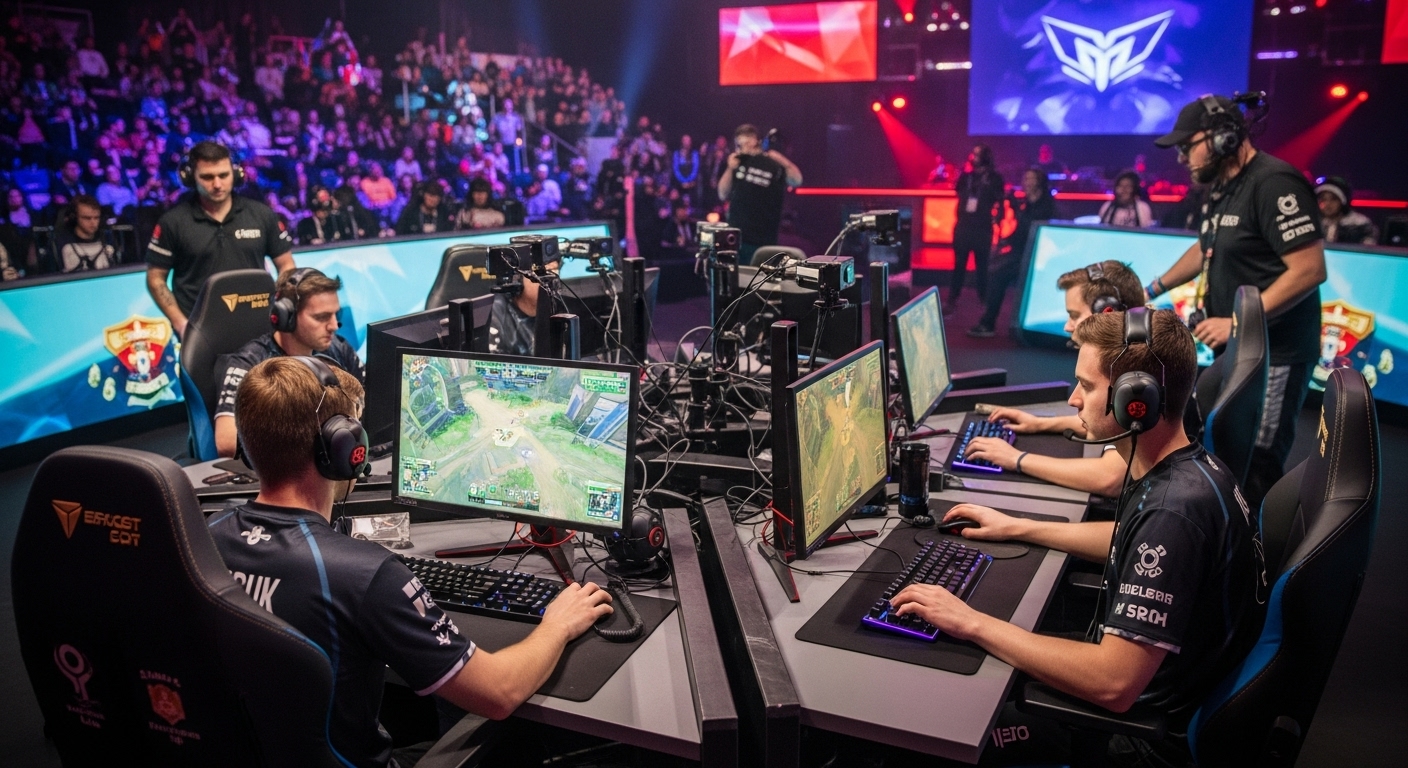
Introduction: Esports in the 21st Century
In the past two decades, esports has transformed from a niche hobby into a global phenomenon, attracting millions of viewers, professional players, and sponsors worldwide. The term “esports” refers to competitive video gaming, where individuals or teams compete in various games, often for substantial prizes and recognition. While gaming was once perceived primarily as a leisure activity, the professionalization of esports has challenged traditional notions of sports, entertainment, and digital culture. Today, esports is not only a platform for competition but also a thriving industry that bridges technology, media, and global youth culture.
Historical Background: From LAN Parties to Global Arenas
The roots of esports can be traced back to the late 1970s and early 1980s, when early video games like Space Invaders and Pac-Man sparked competitive interest. However, the first recognizable form of esports emerged during the 1990s with the rise of multiplayer PC games and the proliferation of local area network (LAN) competitions. Titles such as Quake, Counter-Strike, and StarCraft became iconic, paving the way for organized tournaments and competitive leagues.
During this period, the community-driven culture of gaming played a significant role. Players would gather in small, often informal competitions to prove their skills. The emergence of online connectivity in the late 1990s and early 2000s, coupled with faster internet speeds, allowed gamers to compete with people across the globe. This period marked a shift from local gatherings to online tournaments, setting the stage for modern esports as a worldwide phenomenon.
The Growth of Esports as a Professional Industry
By the mid-2000s, esports began to adopt a more professional structure. Organizations started recruiting players to compete full-time, offering salaries and sponsorships. Major tournaments began offering substantial prize pools, sometimes rivaling traditional sports events. Games like League of Legends, Dota 2, and Overwatch became household names in the esports community due to their strategic depth, competitive balance, and global appeal.
The professionalization of esports has been driven not only by players but also by investments from game publishers, media companies, and sponsors. For example, companies recognized the marketing potential of reaching younger demographics who are heavily engaged in gaming. This led to the creation of league structures similar to traditional sports, including franchised teams, seasonal tournaments, and world championships.
Major Esports Titles and Their Impact
Different games have shaped esports in unique ways. StarCraft helped establish South Korea as an esports powerhouse, creating a professional culture that included televised matches and celebrity gamers. Counter-Strike brought tactical team-based gameplay to a global audience, influencing the rise of first-person shooter competitions. Meanwhile, League of Legends and Dota 2 have become synonymous with esports spectacle, offering massive tournaments like the League of Legends World Championship and The International, which draw millions of viewers worldwide.
Each game brings its own community, strategies, and meta-game dynamics, allowing players to specialize and fans to follow their favorite teams or players. The diversity of games ensures that esports appeals to a wide audience, from casual viewers interested in storylines and rivalries to hardcore fans analyzing strategies and in-game mechanics.
The Role of Streaming and Media in Esports
A significant factor in the growth of esports has been the rise of streaming platforms. Platforms like Twitch, YouTube Gaming, and others have allowed players to broadcast matches to millions of viewers in real time. Streaming not only provides entertainment but also fosters community engagement, with viewers interacting with players, discussing strategies, and celebrating victories together.
Media coverage has also contributed to legitimizing esports as a professional pursuit. Dedicated esports journalism, online content creators, and even traditional sports networks now cover competitive gaming. The visibility of esports has transformed it from a subculture to a mainstream form of entertainment, attracting sponsors, advertisers, and investors eager to tap into this rapidly expanding market.
Economic Impact of Esports
The esports industry has experienced exponential economic growth. Revenue streams include sponsorships, advertising, ticket sales for live events, merchandise, and media rights. In 2024, global esports revenue exceeded billions of dollars, with projections indicating continued growth. This economic impact has led to job creation in areas such as event management, coaching, broadcasting, game development, and digital marketing.
Sponsorship deals with major brands, from technology companies to consumer goods, underscore the marketability of esports. Players and teams have become influencers, attracting brand partnerships and social media followings. Esports organizations now operate like professional sports franchises, with management structures, marketing departments, and dedicated training facilities.
Challenges Facing the Esports Industry
Despite its rapid growth, esports faces several challenges. One major issue is sustainability. While top-tier players earn significant income, many professional gamers struggle with unstable contracts, short career spans, and high levels of stress. Unlike traditional sports, esports careers often peak at a young age, requiring careful planning for life after competitive gaming.
Another challenge is the lack of standardized regulation. Different games and leagues operate under their own rules, which can lead to inconsistencies in competition, player rights, and tournament management. Issues such as cheating, match-fixing, and harassment also pose risks to the integrity and reputation of esports.
Additionally, the mental and physical health of players has become a focus. Long hours of practice, high-pressure tournaments, and travel demands can contribute to burnout, repetitive strain injuries, and mental health challenges. Addressing these issues is crucial for the long-term sustainability of the industry.
Esports and Education: Opportunities for Youth
Esports has also begun to intersect with education, offering opportunities for students to engage in competitive gaming while developing valuable skills. Many universities and high schools now offer esports programs, complete with scholarships, coaching staff, and competitive leagues. These programs promote teamwork, strategic thinking, communication, and time management, demonstrating that esports can be both recreational and educational.
Collegiate esports leagues have grown in popularity, mirroring traditional sports structures. Universities recognize the appeal of esports in recruiting students and fostering community engagement. For students pursuing careers in gaming, technology, or media, involvement in esports provides practical experience and networking opportunities.
The Global Reach of Esports
Esports has a truly global footprint, transcending cultural, geographic, and linguistic boundaries. South Korea, China, and the United States are major hubs, each contributing uniquely to the esports ecosystem. South Korea pioneered professional esports infrastructure, China hosts massive tournaments with enormous prize pools, and the United States has developed large-scale esports leagues with franchised teams.
The global nature of esports also fosters cross-cultural collaboration and competition. International tournaments bring together players and fans from diverse backgrounds, creating a sense of shared community. This global reach contributes to the rapid dissemination of strategies, innovations, and trends within the esports scene.
Technological Innovations Driving Esports
Technological advancements have played a critical role in the evolution of esports. High-speed internet, powerful gaming hardware, and sophisticated software platforms enable competitive gaming at unprecedented levels. Innovations such as virtual reality, augmented reality, and AI-driven analytics are beginning to influence how games are played, streamed, and analyzed.
Data analytics has become an integral part of professional esports. Teams use performance metrics, heatmaps, and AI-based insights to optimize strategies, evaluate opponents, and train players. These technological tools not only enhance competitive performance but also deepen fan engagement, allowing viewers to follow matches with greater understanding and insight.
The Cultural Impact of Esports
Esports has reshaped contemporary culture, influencing fashion, music, social media, and entertainment. Gaming personalities and esports athletes have become celebrities, inspiring fans and shaping trends. Cosplay, fan art, and online communities contribute to the vibrant cultural ecosystem surrounding esports.
Moreover, esports challenges traditional notions of athleticism and competition. It demonstrates that skill, strategy, and reflexes in a virtual environment can command global attention and respect. This cultural shift has implications beyond gaming, influencing how society perceives technology, entertainment, and youth culture.
Future Trends in Esports
The future of esports promises continued expansion and innovation. Emerging trends include the integration of virtual reality, more immersive fan experiences, expansion into mobile gaming, and increased collaboration with traditional sports organizations. Esports may also see more robust governance structures, addressing player welfare, standardizing rules, and enhancing transparency.
Investment in esports education, infrastructure, and research is likely to grow, supporting both the professional and recreational aspects of competitive gaming. With increasing global accessibility, esports will continue to attract new players, fans, and investors, solidifying its place as a major component of the entertainment industry.
Conclusion: Esports as a Mainstream Force
Esports has evolved from small gatherings of enthusiastic gamers into a multi-billion-dollar global industry. It combines competition, entertainment, technology, and culture in unique ways, offering opportunities for players, viewers, and businesses alike. While challenges remain, the growth, innovation, and global reach of esports signal that it is here to stay. As esports continues to evolve, it will not only redefine competitive gaming but also reshape broader cultural and economic landscapes, proving that virtual competition can hold as much excitement, drama, and impact as any traditional sport.