
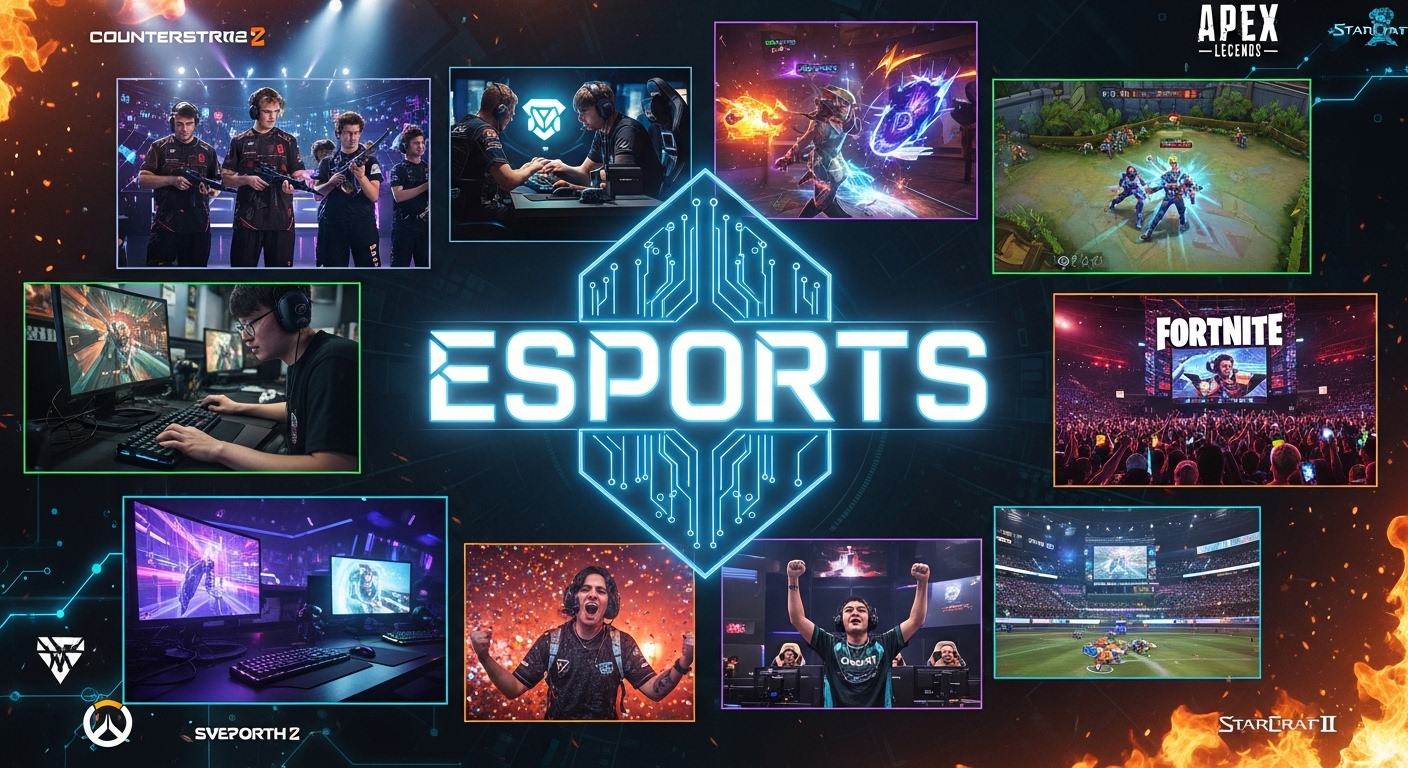
Esports, short for electronic sports, has undergone an incredible transformation over the last two decades. What once began as casual gaming in basements and arcades has blossomed into a worldwide entertainment powerhouse, drawing millions of fans, players, and sponsors. Esports is no longer just a hobby or an underground community—it’s a fully-fledged industry, with professional leagues, huge prize pools, and sponsorship deals comparable to those in traditional sports. In this blog, we will delve into the origins of esports, its rapid growth, the impact it has had on the gaming industry, and what the future holds for competitive gaming.
The Birth of Competitive Gaming
The story of esports begins long before it became a massive industry. In the 1970s, arcade gaming was a popular pastime, and as early as 1972, Space Invaders hosted the first video game competition—the Space Invaders Championship—in California. While small by today’s standards, it marked the first organized event in competitive gaming. However, it wasn’t until the 1990s, with the advent of personal computers and early networked games, that esports as we know it began to take shape.
One of the first games to make a mark in competitive gaming was Doom (1993), which introduced multiplayer functionality. Players could connect via local area networks (LAN) to compete against each other in real-time. This led to the first “LAN parties” where gamers gathered together in large rooms to play against each other for fun, and sometimes, for small prizes. However, it was the Quake series (released in 1996) that laid the foundation for modern esports. Quake tournaments were some of the first truly large-scale competitions, with players and teams from around the world participating. These tournaments were held online and in LAN settings, attracting thousands of spectators.
The late 1990s and early 2000s saw competitive gaming grow, particularly in Asia. StarCraft, a real-time strategy game released in 1998 by Blizzard Entertainment, became a cultural phenomenon in South Korea, where it helped shape the landscape of esports. South Korea, with its strong internet infrastructure and government support, became the epicenter of esports, leading to televised tournaments, the first professional gaming leagues, and large sponsorship deals. The Proleague, South Korea’s premier StarCraft league, was the first of its kind and attracted tens of thousands of viewers. By the mid-2000s, esports had taken root as a professional sport in South Korea, with dedicated television channels for gaming content, a regular tournament calendar, and athletes playing in full-time roles.
The Rise of Global Esports
By the mid-2000s, esports had grown out of its niche in South Korea and began to spread globally. The introduction of games like Warcraft III and Dota further boosted the esports movement. However, it wasn’t until 2009, with the release of League of Legends (LoL) by Riot Games, that esports began to evolve into a truly global phenomenon. LoL, a multiplayer online battle arena (MOBA) game, introduced a level of accessibility and excitement that attracted millions of players worldwide.
The success of League of Legends laid the foundation for modern esports leagues. In 2011, Riot Games hosted the first League of Legends World Championship, an event that would go on to become one of the largest and most prestigious esports tournaments in the world. With its structured league format, growing viewership, and lucrative prize pools, the League of Legends World Championship became a symbol of the commercialization of esports, providing a model that other game developers and publishers began to follow.
In parallel to LoL’s rise, other games were also gaining traction. Dota 2, developed by Valve Corporation, introduced one of the largest prize pools in esports history. The International, Dota 2’s premier tournament, made headlines in 2011 with a prize pool of $1 million, a figure that was unprecedented at the time. The tournament’s success paved the way for future esports tournaments with massive prize money and a truly global following. By 2019, the prize pool for the International reached over $34 million, a record-breaking amount that reflected the incredible growth of the esports industry.
With the advent of streaming platforms like Twitch, which was launched in 2011, esports had a new medium through which to reach a global audience. Twitch allowed players to stream their gameplay live, building massive followings and creating new opportunities for fan engagement. This shift to streaming has made esports more accessible to people worldwide, allowing them to watch live competitions in real-time, no matter where they are.
The development of dedicated esports organizations also became a key factor in the global rise of esports. Major gaming franchises, such as Counter-Strike: Global Offensive (CS: GO), Overwatch, and Fortnite, created professional leagues and teams, leading to an influx of sponsorship deals from major brands like Coca-Cola, Intel, and Adidas. These partnerships helped esports become more professional and financially viable, with athletes now able to make a living from competing in tournaments.
Esports as a Profession
As esports gained more traction globally, the concept of gaming as a profession became more realistic. Professional players, coaches, analysts, and casters (commentators) were able to turn their passion for gaming into full-time careers. Esports organizations began to form teams around top players, offering salaries, sponsorships, and housing, much like traditional sports teams.
The development of esports as a career also led to the establishment of training facilities, coaching staffs, and health programs to ensure that players perform at their best. The grueling schedule of competitive gaming, with long hours of practice, tournaments, and travel, requires players to be physically and mentally fit. Many esports organizations now employ psychologists, fitness trainers, and even chefs to help players stay at their peak performance levels.
Esports athletes, much like their counterparts in traditional sports, began to enjoy the benefits of fame and recognition. Players such as Faker (Lee Sang-hyeok), a League of Legends legend, and Ninja (Tyler Blevins), a Fortnite streamer, became household names. Esports players have sponsorship deals with major brands, appear in commercials, and even make guest appearances on mainstream talk shows and television programs. The allure of esports as a profession also extends beyond players, with roles such as coaches, managers, broadcasters, and analysts all contributing to the growth of the industry.
Esports Tournaments and Global Events
Esports tournaments have become major events in the global entertainment calendar, drawing huge crowds and attracting millions of viewers online. The League of Legends World Championship, for instance, regularly draws an audience of over 100 million viewers. Other major tournaments, such as the International for Dota 2, the Fortnite World Cup, and the Overwatch League Grand Finals, also boast impressive viewership numbers. These events are held in large arenas, and some, like the League of Legends World Championship, are hosted in iconic venues such as the Staples Center in Los Angeles or the Shanghai World Expo Center in China.
The grandiose scale of esports tournaments is a testament to the industry’s growth. Events are often broadcasted across multiple platforms, including television, digital media, and social media channels, further expanding the reach of esports to a broader audience. The production quality of these events rivals that of traditional sports, with elaborate opening ceremonies, high-definition broadcasts, and engaging live commentary that adds excitement and drama to the competition.
In addition to traditional esports tournaments, virtual esports leagues have become a significant part of the esports ecosystem. The Overwatch League, for example, introduced a city-based franchising model similar to that of traditional sports leagues like the NFL or NBA. This move towards a more structured league format has provided stability and long-term investment in esports, leading to the creation of city-based teams and increasing the sport’s visibility across the globe.
The Cultural Impact of Esports
Esports has had a profound cultural impact, particularly among younger generations. The accessibility of online gaming has made it easier for people from diverse backgrounds to connect and share a common passion. Esports tournaments, streaming platforms, and social media have created a vibrant community where players, fans, and content creators can interact, share experiences, and build relationships.
The rise of esports has also led to the integration of gaming into mainstream culture. Universities and colleges now offer scholarships for esports athletes, and some schools have even built esports arenas. Esports is being recognized as a legitimate extracurricular activity, and it’s seen as an avenue for students to develop skills in teamwork, communication, and strategy.
Furthermore, the partnership between esports and traditional sports is growing stronger. Several professional sports teams, including NBA franchises like the Golden State Warriors and the Philadelphia 76ers, have invested in esports teams and organizations. This trend signifies that esports is not only a hobby but a legitimate form of entertainment with its own cultural significance.
The Future of Esports
As we look toward the future, the potential for esports seems limitless. The continued advancement of technology, such as virtual reality (VR) and augmented reality (AR), will open new doors for immersive gaming experiences, pushing the boundaries of what esports can offer. We are also seeing the integration of blockchain technology and cryptocurrency into the esports ecosystem, allowing for new ways to monetize tournaments and reward players.
The growth of mobile gaming is another factor that will shape the future of esports. Games like PUBG Mobile and Clash Royale have proven that competitive gaming can thrive on smartphones, making esports even more accessible to a global audience. Mobile esports leagues are rapidly growing, and the rise of mobile gaming will likely expand esports into regions with less access to high-end gaming PCs or consoles.
Additionally, the integration of esports into schools and universities will continue to grow. As the professional esports scene becomes more structured and formalized, it will attract more young players who aspire to become professionals. This will create a pipeline of talent that feeds into the industry, ensuring the longevity of competitive gaming.
Conclusion: Esports—A Staple of the Modern Entertainment Landscape
Esports has evolved from a niche hobby to a global entertainment powerhouse, touching every corner of the globe and connecting millions of players and fans. The industry has grown in size, scope, and significance, providing career opportunities for players and professionals alike while changing the cultural landscape of gaming. As esports continues to grow and develop, it is poised to become an even more integral part of modern entertainment, with more mainstream recognition and a bright future ahead. Whether you’re a player, a fan, or just an observer, esports is here to stay.