
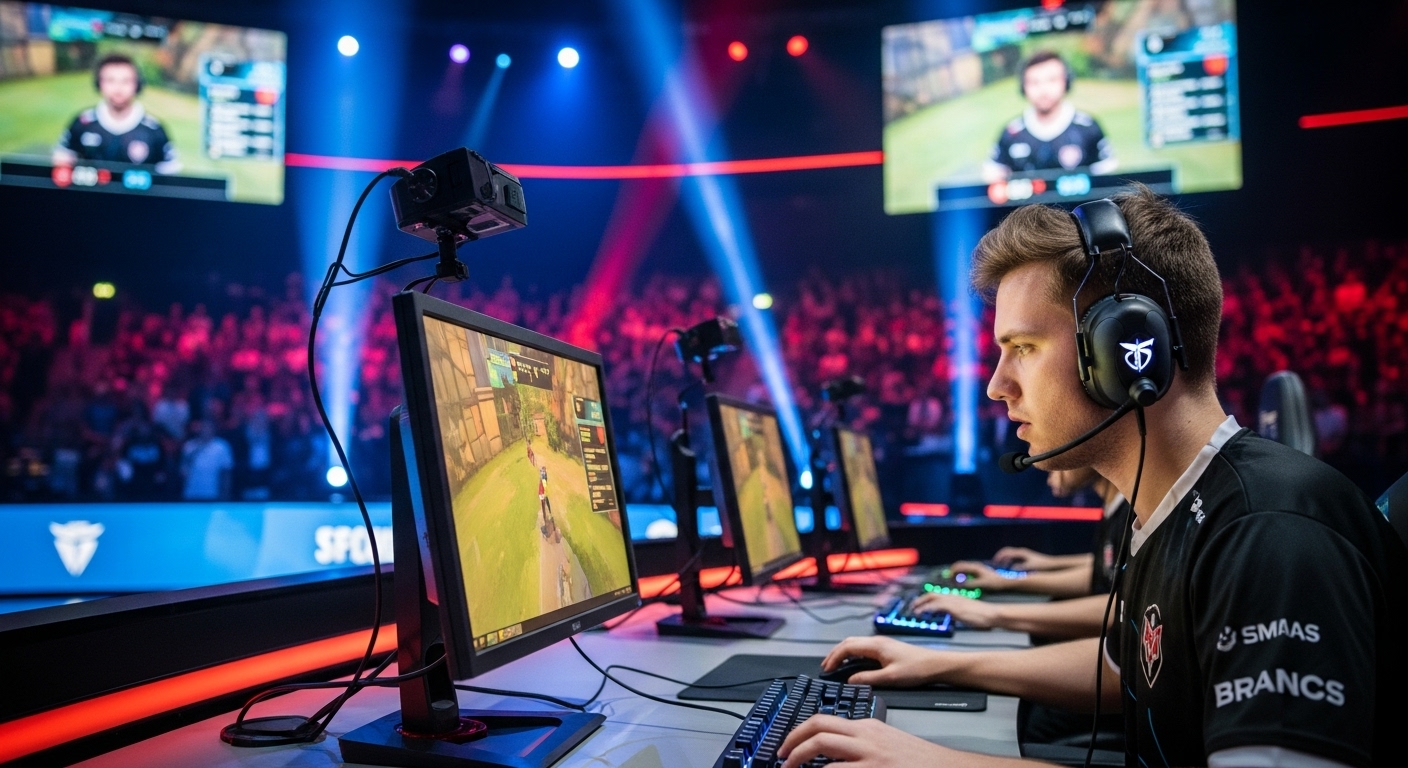
Introduction: The Rise of a Digital Sporting Revolution
In the past two decades, few industries have experienced the meteoric rise that Esports has enjoyed. Once dismissed as a casual pastime for young gamers, Esports has transformed into a multi-billion-dollar global enterprise that rivals traditional sports in viewership, sponsorship, and cultural impact. From packed arenas and international tournaments to university scholarships and Olympic recognition discussions, Esports has redefined what competition means in the 21st century.
At its core, Esports represents more than just video games—it symbolizes a global convergence of technology, entertainment, and community. With the rapid advancement of internet infrastructure, streaming platforms, and competitive gaming ecosystems, Esports has moved from living rooms to world stages.
The Origins of Esports: Where It All Began
The journey of Esports started modestly in the 1970s and 1980s. The first notable competition occurred in 1972 at Stanford University, where students competed in the game Spacewar. The prize? A subscription to Rolling Stone magazine. It was a humble beginning, but it laid the foundation for competitive gaming.
In the 1980s, arcade gaming competitions like Pac-Man and Donkey Kong drew local and national attention. Magazines featured high-score leaders, and early televised gaming contests began to appear. However, it wasn’t until the 1990s—with the explosion of personal computers, home consoles, and the internet—that Esports truly began to form its identity.
LAN parties, where gamers connected computers in one room to play multiplayer matches, became the early breeding grounds of professional Esports. Titles like Quake, Counter-Strike, StarCraft, and Warcraft III helped define the genre and inspired the first organized tournaments.
The 2000s: Birth of the Modern Esports Era
The early 2000s marked the transformation of Esports from grassroots events to organized leagues. Broadband internet allowed players worldwide to compete online, and global communities started to form around specific games.
South Korea played a monumental role during this period. The government’s investment in high-speed internet led to the creation of PC bangs (gaming cafes), and StarCraft became a national obsession. Televised matches drew millions of viewers, and players like Lim “BoxeR” Yo-hwan became household names. South Korea effectively built the blueprint for what modern Esports could look like—a professionalized, celebrated, and sustainable industry.
In North America and Europe, competitive gaming also began to take shape. The Cyberathlete Professional League (CPL) and Major League Gaming (MLG) hosted tournaments for Counter-Strike, Halo, and Call of Duty, helping Esports reach new audiences.
Esports Becomes a Spectator Sport
A pivotal moment in Esports history came with the rise of live streaming. The early 2010s saw the birth of platforms like Twitch, YouTube Gaming, and Mixer (now defunct), which allowed fans to watch their favorite players compete in real-time. This changed everything.
Previously, Esports spectators were limited to recorded videos or in-person attendance. Streaming democratized viewership. Anyone with an internet connection could watch tournaments, follow teams, and even interact with players through chat. This interactive engagement gave Esports an advantage over traditional sports—the community became part of the experience.
By 2013, tournaments such as The International for Dota 2 and League of Legends World Championship drew millions of concurrent viewers. Prize pools skyrocketed, with The International 2019 surpassing $30 million in total winnings.
The Games That Defined the Industry
While Esports now spans hundreds of titles, certain games have played a defining role in shaping its culture and success.
1. League of Legends (Riot Games)
Launched in 2009, League of Legends (LoL) became one of the most-watched and competitive Esports titles in the world. With its global league structure and consistent developer support, LoL’s annual World Championship has become the “Super Bowl” of Esports.
2. Counter-Strike: Global Offensive (Valve)
Building on the legacy of Counter-Strike 1.6 and Source, CS:GO became the gold standard for tactical first-person shooters. Its simplicity and skill-based mechanics ensure it remains a fan favorite across generations.
3. Dota 2 (Valve)
Known for its complexity and strategic depth, Dota 2 has maintained one of the largest Esports prize pools through its crowdfunding model. Its annual The International event remains one of the most prestigious tournaments in the world.
4. Fortnite (Epic Games)
When Fortnite burst onto the scene in 2017, it redefined what an Esports title could be. Combining fast-paced gameplay with massive cultural influence, Fortnite attracted younger audiences and mainstream sponsors like no other.
5. Valorant, Overwatch, and Beyond
Modern tactical shooters like Valorant and Overwatch brought new life to the genre with their blend of character abilities and precise gunplay. Each game introduced new fan bases and professional circuits.
The Economic Powerhouse of Esports
Esports has evolved into a thriving multi-billion-dollar industry. According to market research, the global Esports market surpassed $1.5 billion in revenue by the early 2020s, with projections continuing to climb. The growth stems from various revenue streams:
- Sponsorships and Advertising: Brands such as Intel, Red Bull, and Mercedes-Benz have invested heavily in Esports. Sponsorship now accounts for the majority of Esports revenue.
- Media Rights: Streaming platforms pay millions for exclusive broadcasting rights, similar to traditional sports networks.
- Merchandising and Ticket Sales: Esports events fill stadiums, and fans purchase jerseys, collectibles, and digital skins.
- Publisher Revenue: Game developers like Riot Games and Valve profit from in-game purchases linked to tournaments.
This economic ecosystem has made professional gaming a viable career path for thousands of players, casters, coaches, and production crews worldwide.
The Players: New-Age Athletes
The stereotype of the isolated gamer is long outdated. Today’s Esports athletes are disciplined, strategic, and physically conditioned for long hours of mental endurance. Top players train for 8–12 hours a day, studying game mechanics, analyzing opponents, and perfecting reflexes.
Just like football or basketball stars, Esports professionals have agents, nutritionists, and personal trainers. Many live in team houses, follow strict schedules, and adhere to diet and sleep routines to maintain peak performance.
These players also wield massive influence. Esports celebrities like Faker, s1mple, and Ninja have millions of followers, lucrative sponsorship deals, and the ability to shape gaming culture globally.
The Esports Infrastructure: Leagues, Teams, and Organizations
Modern Esports operates through a structured framework of franchised leagues, tournaments, and organizations.
Franchised leagues such as the Overwatch League (OWL) and League of Legends Championship Series (LCS) mirror traditional sports models, with city-based teams, seasonal schedules, and revenue sharing.
Esports organizations like Team Liquid, Fnatic, T1, and Cloud9 function as multi-game enterprises. They field teams across multiple titles, sign sponsorships, and create content for fan engagement.
Behind the scenes, production companies, event organizers, and technical staff ensure that broadcasts run seamlessly for millions of global viewers. This professional ecosystem demonstrates how far Esports has come from its grassroots origins.
Education and Career Opportunities in Esports
Esports has expanded beyond competition into academia and professional development. Universities now offer scholarships for Esports athletes, and degree programs in game design, marketing, and event management have become increasingly common.
Esports also creates diverse career paths—commentators, analysts, coaches, managers, and event coordinators are all integral to the industry. The demand for Esports professionals has led to new job markets across media production, marketing, and technology.
Even governments and educational institutions have started acknowledging Esports’ potential. Countries like South Korea, China, and the United States now host high school and collegiate Esports tournaments, further legitimizing the industry.
Esports and the Global Community
The most powerful aspect of Esports is its ability to connect people across cultures. Whether it’s a fan in Brazil cheering for a Korean team or a player in Egypt competing with someone in Canada, Esports transcends borders.
Language barriers dissolve through the universal language of gameplay. Online platforms allow fans to chat, strategize, and build friendships in virtual spaces. This community-driven nature gives Esports an unmatched inclusivity that traditional sports often lack.
Moreover, Esports has also played a key role in promoting gender diversity and accessibility. While the industry is still male-dominated, more women are breaking into professional circuits and content creation, pushing for equality and representation.
Challenges Facing the Esports Industry
Despite its success, Esports faces several significant challenges:
1. Player Burnout
The intense training schedules and constant competition can lead to mental and physical exhaustion. Many top players retire before the age of 25 due to stress or injury.
2. Stability and Regulation
Unlike traditional sports, Esports lacks a unified governing body. This absence leads to inconsistent rules, uneven pay structures, and occasional disputes between developers, teams, and organizers.
3. Cheating and Integrity Issues
As with any competition, cheating—through software hacks or match-fixing—poses threats to Esports’ credibility. Developers continue to invest in anti-cheat systems to maintain fair play.
4. Financial Sustainability
While Esports attracts massive investment, profitability remains uneven. Only top-tier tournaments and organizations are consistently profitable, with smaller events struggling for financial stability.
The COVID-19 Effect: Esports Thrives Amidst Lockdown
When the COVID-19 pandemic disrupted global sports events, Esports became one of the few forms of live competition that could continue safely. Online tournaments replaced in-person events, and viewership surged as millions turned to gaming for entertainment.
This period cemented Esports as a resilient and adaptable form of entertainment. Even traditional sports leagues began to host Esports versions of their competitions, such as the FIFA eWorld Cup and NBA 2K League.
The Future of Esports: What Lies Ahead
As technology continues to evolve, the future of Esports looks more promising than ever. Key trends shaping the next decade include:
- Virtual Reality (VR) and Augmented Reality (AR): Immersive technologies will create new genres of Esports that blend physical and digital performance.
- Mobile Esports: Titles like PUBG Mobile and Mobile Legends have already shown the power of portable gaming markets, especially in Asia and South America.
- AI and Data Analytics: Advanced tools will optimize player performance, enhance training, and provide deeper spectator insights.
- Metaverse Integration: Esports could become a cornerstone of the metaverse—virtual environments where users attend tournaments, socialize, and compete in 3D spaces.
Conclusion: Esports Is Here to Stay
Esports is not a fleeting trend—it’s a cultural evolution. What began as a passion among small groups of gamers has turned into a global phenomenon that rivals the world’s most established sports. It combines the thrill of competition, the artistry of technology, and the unity of community.
From virtual battlefields to packed arenas, from casual players to global icons, Esports has proven one thing: the future of entertainment is digital, interactive, and boundless. As new generations grow up not just watching but participating in Esports, the line between player and spectator continues to blur—creating a new era of global connection through the love of the game.