
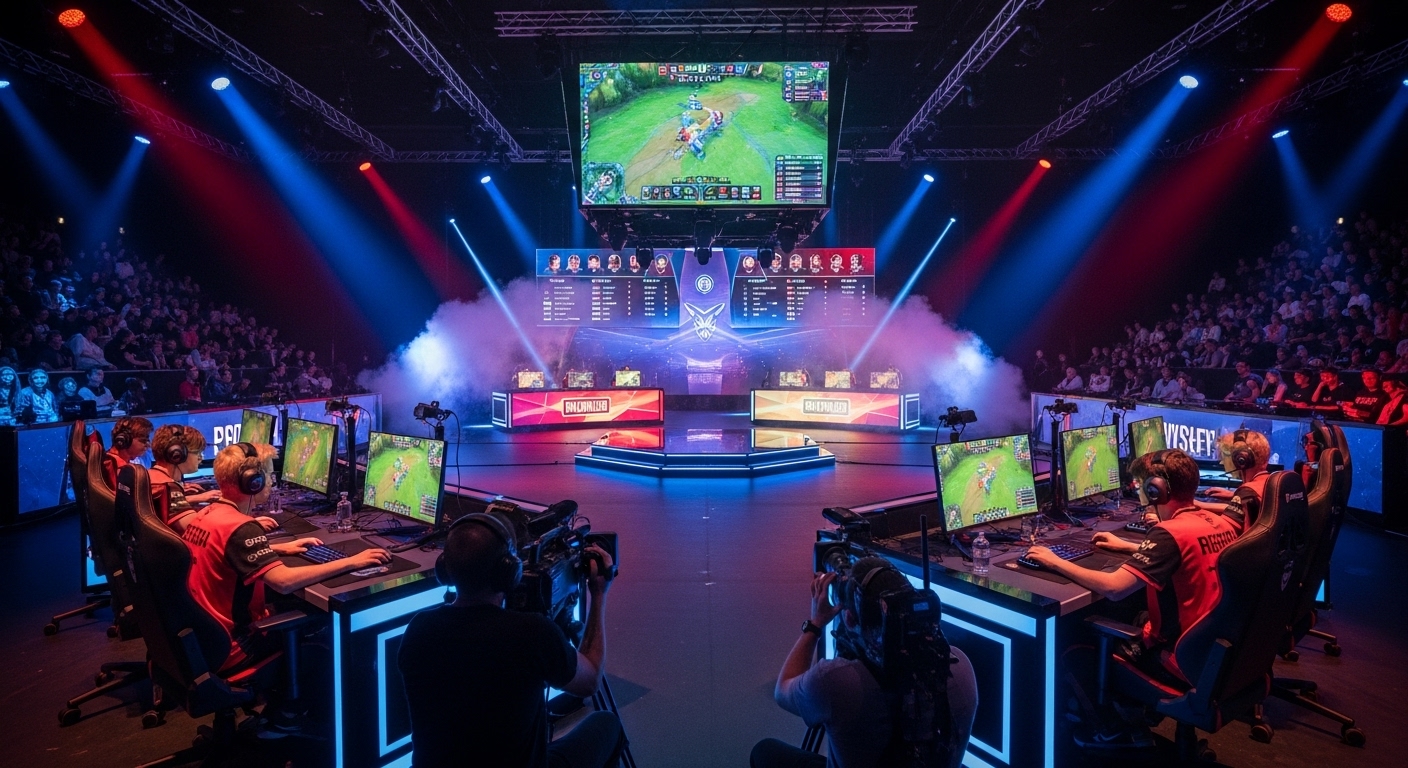
Esports, short for electronic sports, has rapidly transformed from a niche hobby to a global cultural and entertainment juggernaut. What was once considered a pastime for a select group of gamers has now evolved into a multi-billion-dollar industry, attracting millions of viewers, massive sponsorships, and high-profile players. As traditional sports face new challenges and entertainment preferences continue to evolve, esports has emerged as a dominant force in the modern media landscape. In this blog post, we will explore the rise of esports, its impact on society, the business of competitive gaming, and where the industry is headed in the future.
The Birth of Esports: From Hobby to Global Phenomenon
The concept of esports dates back to the early days of video gaming in the 1970s. While arcade games like Pong and Space Invaders offered a competitive element, it wasn’t until the 1990s that gaming competitions began to take on a more formal structure. Early gaming tournaments like the Red Annihilation Quake tournament in 1997 are often credited as the first steps toward the esports phenomenon we know today. However, these early events were small in scale, often limited to local LAN (Local Area Network) parties or online competitions.
In the years that followed, the gaming industry began to grow at an exponential rate, with games like StarCraft and Warcraft building dedicated communities around multiplayer competitions. These early games established the foundation for competitive gaming by offering players the opportunity to compete against others online. As technology improved, so did the experience of playing and watching competitive gaming, which led to the rise of esports as a more formalized, organized industry.
The Golden Age of Esports: Major Milestones and Tournaments
The mid-2000s marked the true beginning of the esports boom. While regions like South Korea had already established a strong competitive gaming culture through games like StarCraft, the global appeal of esports began to take shape during this time. In 2002, the introduction of the World Cyber Games (WCG) and Electronic Sports World Cup (ESWC) helped put esports on the map internationally. These events, which featured players from all over the world competing in popular games like Counter-Strike, Warcraft III, and Quake, set the stage for the esports tournaments that would follow.
By 2009, League of Legends was released, and with it came the rise of one of the most influential games in esports history. Riot Games, the developer behind League of Legends, laid the groundwork for the modern esports ecosystem by establishing professional leagues like the League of Legends Championship Series (LCS), giving players the opportunity to compete for large prize pools, sponsorship deals, and worldwide recognition. The launch of League of Legends marked a pivotal moment in esports, as it transitioned from a casual activity to a professional sport with structured tournaments and leagues.
Around the same time, Dota 2 emerged as another cornerstone of competitive gaming. Its flagship tournament, The International, held by Valve Corporation, revolutionized the esports industry by offering record-breaking prize pools. In 2018, The International had a prize pool exceeding $25 million, largely funded by the game’s community through crowdfunding. This was a pivotal moment for esports, demonstrating the power of fan engagement and the growing commercial potential of competitive gaming.
The Esports Ecosystem: Teams, Leagues, and Players
As esports grew in popularity, the need for a structured system of leagues and organizations became apparent. Today, the esports ecosystem consists of professional teams, competitive leagues, tournament organizers, game publishers, and sponsors. Each component plays a vital role in the development of the industry.
Esports teams, much like traditional sports teams, consist of professional players who train, compete, and represent an organization in various tournaments and leagues. These teams often have support staff, including coaches, analysts, and managers, to help players perform at their best. Many esports teams are now backed by major investors or organizations that see the long-term potential of the industry. These organizations often sign sponsorship deals with brands, tech companies, and even sportswear manufacturers, securing financial backing and visibility for their teams.
Leagues like the Overwatch League and the Call of Duty League operate much like traditional sports leagues, with structured seasons, divisions, and playoffs. These leagues help standardize competitive gaming, providing a framework for professional players and organizations to compete within. These leagues also offer viewers consistent scheduling, making esports more accessible to a larger audience.
On the individual level, professional esports players can earn substantial incomes through tournament winnings, sponsorships, and streaming revenue. For many players, streaming on platforms like Twitch or YouTube provides an additional source of income, as viewers can subscribe to channels or donate to their favorite players. Some high-profile players even go on to develop their own personal brands, signing endorsement deals or launching merchandise lines, further solidifying their place in the esports industry.
The Esports Audience: Expanding Beyond Gamers
One of the most fascinating aspects of esports is the way its audience has evolved. Initially, esports was primarily for gamers who understood the intricacies of competitive play. However, as the industry has grown, so too has the diversity of its audience. Today, esports draws millions of viewers from all walks of life, including people who may not be avid gamers themselves but appreciate the strategic, fast-paced nature of the competitions.
In 2021, the League of Legends World Championship attracted over 100 million unique viewers across its various streams, a number that rivals the viewership of traditional sports events like the Super Bowl. Additionally, esports tournaments are now broadcast on mainstream television networks, such as ESPN and TBS, further increasing the accessibility of esports to a wider audience. This mainstream appeal has helped to solidify esports as a legitimate form of entertainment, much like traditional sports.
The rise of esports as a spectator sport is also closely tied to the growth of streaming platforms like Twitch and YouTube Gaming. These platforms allow fans to watch live events, interact with players, and even participate in the community by chatting, donating, and subscribing to content creators. The interactivity of streaming has created a unique bond between players and fans, where the audience feels like they are a part of the action.
The Business of Esports: Sponsorships, Advertisements, and Revenue Streams
Esports has grown into a billion-dollar industry, with multiple revenue streams contributing to its success. Sponsorships and advertising deals are at the forefront of this financial growth. Esports tournaments and leagues attract major brands from a variety of industries, including technology, automobiles, and even food and beverage. Companies like Intel, Coca-Cola, and Mercedes-Benz have invested heavily in esports sponsorships, recognizing the vast audience and the potential for brand exposure.
In addition to sponsorships, esports tournaments generate revenue through ticket sales, merchandise, and media rights. Events like The International or the League of Legends World Championship sell tickets to fans who want to attend live, in-person events. Merchandise, including team jerseys, hats, and other apparel, provides another significant revenue stream. Broadcasting rights, especially for large tournaments, are sold to networks like ESPN or NBC, giving companies a platform to advertise their products while esports fans tune in to watch the competition.
Streaming platforms, such as Twitch, also play a major role in the financial ecosystem of esports. Streamers, who are often highly influential in the esports community, generate income through ads, subscriptions, and donations from viewers. This model has helped make esports more accessible to a larger number of fans, while also offering content creators a way to monetize their gaming skills and personalities.
Esports and Traditional Sports: A Growing Symbiosis
As esports has grown, it has increasingly been compared to traditional sports. Both esports and traditional sports share similar structures, including professional teams, tournaments, and leagues. There are also similarities in the way both industries engage with fans, with teams developing dedicated fan bases, merchandise, and branding. The rise of esports has even led to the creation of “esports arenas,” dedicated venues where fans can watch live events, similar to stadiums for traditional sports.
Traditional sports organizations have also started to take notice of esports’ meteoric rise. The NBA, NFL, and FIFA have all made moves into the esports space, with leagues like the NBA 2K League and the FIFA eWorld Cup offering competitive opportunities for players to represent their respective sports digitally. In fact, some traditional athletes, including professional basketball player Shaquille O’Neal and David Beckham, have invested in esports teams, further bridging the gap between the two industries.
While esports and traditional sports remain distinct, it is clear that the two are beginning to coexist in ways that benefit both. Esports’ ability to engage younger audiences, particularly those who may not be as interested in traditional sports, offers a new avenue for fan engagement. Meanwhile, traditional sports can bring additional legitimacy and infrastructure to esports, helping the industry continue to grow and evolve.
The Future of Esports: What’s Next?
The future of esports looks incredibly bright, with continued growth expected across multiple dimensions. As technology advances, esports will continue to evolve, offering new experiences for players and fans alike. Virtual reality (VR) and augmented reality (AR) are already starting to make their way into competitive gaming, providing an immersive experience that could redefine how esports tournaments are played and watched. With VR headsets becoming more accessible and affordable, it’s only a matter of time before esports expands into the virtual realm.