
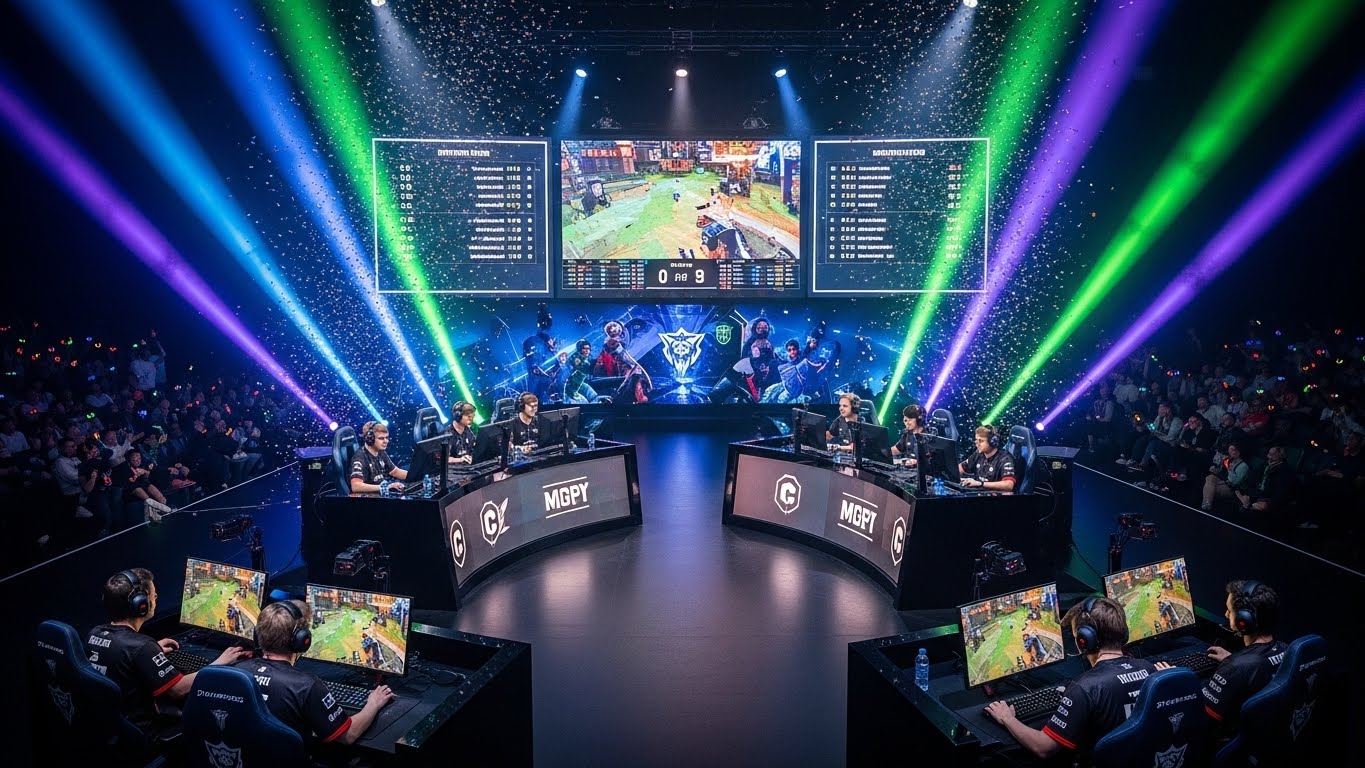
In the past decade, esports has emerged as one of the most influential and rapidly growing industries in the world. Once dismissed as a hobby for niche communities, competitive gaming now rivals traditional sports in viewership, economic impact, and cultural relevance. Esports is not just about playing video games; it is a global movement that combines skill, strategy, technology, and community. In this blog, we explore the evolution of esports, its influence on players and society, and why it has become a defining feature of modern entertainment.
The Evolution of Esports
Esports, short for electronic sports, refers to organized competitive gaming where players compete individually or in teams for rankings, prizes, and recognition. The roots of esports can be traced back to the 1970s and 1980s with arcade competitions and early PC gaming. Titles such as Pac-Man, Street Fighter, and StarCraft laid the foundation for competitive gaming, but it was the internet revolution that transformed esports into a global phenomenon.
High-speed internet, powerful gaming consoles, and advanced PCs enabled online multiplayer experiences, while platforms for live streaming allowed fans to watch players in real time. Today, esports encompasses hundreds of games, including League of Legends, Dota 2, Counter-Strike, and Fortnite. Major tournaments fill stadiums, broadcast to millions online, and feature multi-million-dollar prize pools, proving that esports is no longer just entertainment—it is a serious profession and cultural force.
Physical and Mental Demands of Professional Gaming
Contrary to common perception, esports is not purely sedentary. Competitive gaming places both physical and mental demands on players. Reflexes, hand-eye coordination, and reaction speed are critical for success. Many professional players follow strict physical routines to maintain posture, prevent repetitive strain injuries, and enhance overall fitness.
Mental demands in esports are equally intense. Players must maintain focus for extended periods, adapt to opponents’ strategies, and make split-second decisions under pressure. Strategic thinking, memory, and problem-solving are constantly challenged. The discipline and cognitive agility developed through esports make it comparable to traditional sports in terms of mental endurance and skill development.
The Importance of Teamwork and Communication
While some esports titles focus on individual skill, team-based games have become a dominant part of the industry. Games such as League of Legends, Valorant, Overwatch, and Dota 2 require precise coordination and communication among team members. A single misstep can cost a match, making teamwork essential for success.
Through these experiences, players develop leadership, empathy, and conflict resolution skills. Understanding each teammate’s strengths and weaknesses, delegating responsibilities, and working under pressure mirrors professional environments outside gaming. Team-based esports not only hones technical skills but also nurtures social intelligence and collaborative problem-solving.
Career Opportunities in Esports
Esports has grown into a lucrative industry with diverse career paths. Professional players earn substantial income through tournament prizes, sponsorships, streaming, and merchandise. Major events often feature prize pools exceeding millions, showcasing the financial potential of competitive gaming.
Beyond playing, careers in esports include coaching, team management, game analysis, broadcasting, content creation, and marketing. Educational institutions have recognized this growth by offering esports programs, scholarships, and research initiatives. The rise of esports demonstrates that digital competition has evolved into a professional ecosystem with opportunities for individuals with varied skills.
Technology as a Driving Force
Technology is the backbone of esports. High-performance gaming systems, fast internet, and sophisticated software allow players to compete at elite levels. Streaming platforms and content-sharing tools enable fans to watch, comment, and interact with players in real time.
Advanced analytics and AI-driven tools help players improve performance by analyzing gameplay patterns, reaction times, and strategic decisions. Technology not only enhances training but also elevates the fan experience, providing live statistics, multiple camera angles, and immersive perspectives. This synergy between technology and gaming continues to push the boundaries of competition and entertainment.
The Cultural Significance of Esports
Esports has evolved into a cultural phenomenon with a global following. Online communities connect millions of players and fans, creating shared experiences and social bonds. Professional players are now influential figures, inspiring trends in fashion, music, and lifestyle.
Esports also promotes inclusivity. Unlike many traditional sports, competitive gaming is accessible to people regardless of age, gender, or physical ability. Online platforms allow diverse participants to compete at all levels, fostering a sense of belonging and equal opportunity. The culture surrounding esports reflects the values of collaboration, creativity, and digital innovation that define contemporary society.
Mental Health Considerations in Esports
The demands of professional gaming place mental health at the forefront of esports discussions. Long hours of training, high expectations, and exposure to online criticism can create stress, anxiety, and burnout. Recognizing this, the esports community has increasingly prioritized mental wellness by providing access to counseling, stress management programs, and resources for balanced lifestyles.
Maintaining mental health is crucial for sustaining performance and extending careers. Many players incorporate mindfulness practices, scheduled breaks, and physical exercise into their routines. The recognition of mental health as a core component of esports demonstrates the industry’s commitment to responsible growth and player well-being.
Economic Impact of Esports
Esports has become a significant economic driver worldwide. Revenue is generated through tournament prizes, sponsorships, advertising, merchandise, and streaming subscriptions. Professional teams operate similarly to traditional sports franchises, with management, marketing, and fan engagement strategies.
Investments from major brands and venture capital highlight the economic potential of the industry. The growth of esports stimulates job creation, technological innovation, and media development, illustrating that competitive gaming is more than a pastime—it is an economic powerhouse shaping multiple sectors.
Esports in Education
Educational institutions are increasingly embracing esports as a tool for skill development and engagement. Schools and universities are integrating esports into curricula to teach teamwork, strategy, and digital literacy. Scholarships and collegiate programs provide students with opportunities to pursue higher education while developing professional gaming skills.
Esports education emphasizes critical thinking, leadership, and adaptability. Students gain experience in decision-making, strategic planning, and communication, preparing them for diverse career paths. This integration into education highlights the transformative potential of esports beyond entertainment.
Challenges Facing the Industry
Despite its growth, esports faces challenges. Player burnout, online toxicity, and unequal access to resources pose significant concerns. Ensuring fair play, mental wellness, and safe online environments is essential for long-term sustainability.
Regulatory frameworks and industry standards will play a vital role in maintaining professionalism and protecting participants. Addressing these challenges ensures that esports continues to grow responsibly, fostering an inclusive and competitive environment for all players and fans.
The Future of Esports
The future of esports is promising, with new technologies shaping its evolution. Virtual reality, augmented reality, and AI-driven analysis are likely to enhance gameplay and spectator experiences. Esports may continue to blur the lines between physical and digital competition, creating immersive and interactive environments.
Professionalization and global recognition will expand further, integrating esports into mainstream entertainment, education, and culture. The industry’s focus on inclusivity, mental health, and technological advancement positions esports as a long-term force in shaping digital competition worldwide.
Conclusion: Esports as a Modern Revolution
Esports has redefined competition, culture, and entertainment in the digital age. It combines skill, strategy, teamwork, and technology in ways that traditional sports never could. Beyond gameplay, esports fosters mental agility, resilience, leadership, and global community.
As the industry grows, it continues to inspire innovation, provide career opportunities, and challenge conventional notions of athleticism and competition. For players, fans, and businesses, esports represents more than just games—it is a cultural and economic movement shaping the present and future of digital society.