
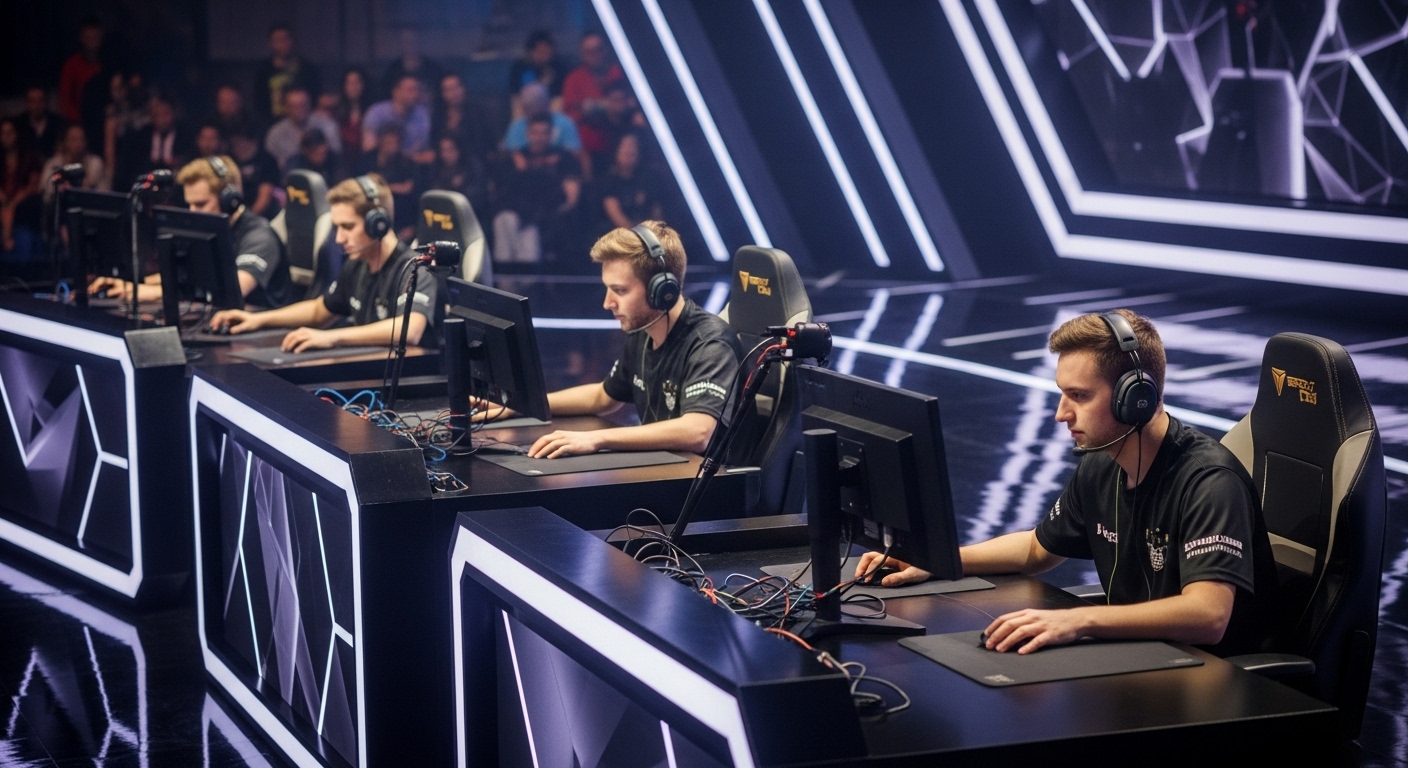
Introduction: A Digital Revolution in Competition
Esports has transformed the way the world views competition and entertainment. No longer confined to casual gaming, esports has become a global phenomenon with professional teams, massive audiences, and lucrative tournaments. What started as small gatherings of gamers in arcades and basements has evolved into a highly structured industry with millions of fans worldwide. This digital form of sport combines strategy, skill, and technology, bridging cultures and generations, and reshaping the concept of professional competition.
The Birth of Competitive Gaming
Competitive gaming traces its roots back to the 1970s and 1980s with arcade games like Space Invaders and Pac-Man. Early competitions were mostly informal, focused on high scores and bragging rights. As personal computers became more accessible, multiplayer games like Doom, Quake, and StarCraft in the 1990s introduced players to networked competitions, giving rise to LAN parties where gamers would meet to compete in person. These events highlighted the potential for gaming as more than a pastime—it could be a structured, skill-based competition.
The Growth of Esports in the Early 2000s
The expansion of broadband internet in the early 2000s enabled global connectivity for gamers. This era saw the emergence of professional leagues, especially in South Korea, where StarCraft tournaments were broadcast on television and players gained celebrity status. Meanwhile, games like Counter-Strike, Halo, and Warcraft III cultivated competitive communities in Western countries. These developments marked the transition of gaming from casual play to organized, professional competition, creating the foundation for today’s esports industry.
The Streaming Era and Audience Expansion
The rise of streaming platforms revolutionized esports by allowing fans to watch live matches online. Services like Twitch enabled players to broadcast their gameplay to millions of viewers, transforming esports athletes into global celebrities. This era also brought fans closer to the action through live chats, interactive content, and personal engagement with their favorite players. Major tournaments, such as the League of Legends World Championship and Dota 2 International, now attract audiences rivaling traditional sporting events, solidifying esports as mainstream entertainment.
Professional Teams and Player Careers
Esports has grown into a highly professionalized industry. Players often dedicate eight to twelve hours daily to practice, honing their skills, strategies, and teamwork. Teams employ coaches, analysts, and even psychologists to maximize performance, emphasizing the discipline required at the highest level. Organizations such as T1, Cloud9, and Fnatic operate across multiple game titles, manage sponsorship deals, merchandise, and fan engagement. Professional players earn salaries, tournament prizes, and endorsements, proving that esports is now a viable long-term career path.
Cultural Impact and Global Influence
Esports has significantly influenced culture, particularly among younger generations. Gaming is increasingly seen as a legitimate career and form of entertainment. Schools and universities have started offering esports scholarships, varsity teams, and academic programs in game design and management. The global nature of esports allows players from diverse backgrounds to compete on equal footing, promoting inclusivity and cross-cultural interaction. It has become a space where talent, dedication, and creativity are celebrated worldwide.
Technological Advancements Shaping Esports
The growth of esports is tightly linked to technological innovation. High-speed internet, powerful gaming PCs, consoles, virtual reality, and cloud gaming have made competitive play more accessible and immersive. Real-time streaming technology allows millions to watch events simultaneously with minimal delay, while data analytics and artificial intelligence help teams refine strategies and optimize performance. These advancements not only enhance gameplay but also create a dynamic and evolving spectator experience.
Educational Opportunities in Esports
Esports provides unique educational and professional opportunities. Many universities now offer varsity esports programs, providing students with training facilities and access to competitions. Academic programs in esports management, digital media, and game design prepare students for careers in the growing industry. Beyond professional pathways, esports also develops valuable life skills, including teamwork, strategic thinking, communication, and leadership, applicable in multiple career fields.
Economic Significance of Esports
The esports industry has grown into a billion-dollar market with revenue streams from sponsorships, merchandise, media rights, and event ticketing. Companies recognize esports as a gateway to younger, digitally native audiences, investing heavily in advertising and partnerships. Beyond professional teams, opportunities exist for event organizers, content creators, marketers, and software developers. The economic impact of esports extends beyond the players, contributing to technology, media, and entertainment sectors worldwide.
Challenges in the Esports Industry
Despite its growth, esports faces challenges. Player burnout, mental health concerns, cheating, and match-fixing are persistent issues. The heavy reliance on specific game titles can destabilize organizations if popularity declines. Regulation remains inconsistent across regions and games, posing challenges for fairness and standardization. Addressing these issues is crucial to maintaining the integrity and long-term viability of the esports ecosystem.
International Recognition and Competitive Expansion
Esports has gained recognition as a legitimate sport in several countries. Competitions such as the Asian Games have included esports as a medal event, and national leagues continue to grow in scale and professionalism. International tournaments create opportunities for cultural exchange and global fan engagement, fostering a sense of community among players and audiences. Governments are increasingly investing in esports infrastructure and development programs, acknowledging its potential to drive both economic and technological growth.
The Future of Esports
The future of esports is promising and continues to evolve rapidly. Mobile gaming is emerging as a competitive platform, particularly in regions where smartphones are more accessible than PCs or consoles. Virtual reality and augmented reality are expected to introduce new levels of immersive competition. Crossovers with music, fashion, and entertainment are turning esports events into cultural spectacles. As technology advances, esports will continue to redefine how people engage with digital entertainment, competition, and community.
Conclusion: Esports as a Modern Phenomenon
Esports is more than a form of gaming—it is a reflection of human skill, creativity, and perseverance in the digital era. From small-scale gatherings to international tournaments, esports showcases talent and dedication while connecting people worldwide. The industry demonstrates that professional competition is no longer limited to physical arenas; virtual spaces can cultivate equally rigorous, engaging, and profitable sports. As esports continues to grow, it represents a shift in how the world defines success, competition, and entertainment in the twenty-first century.