
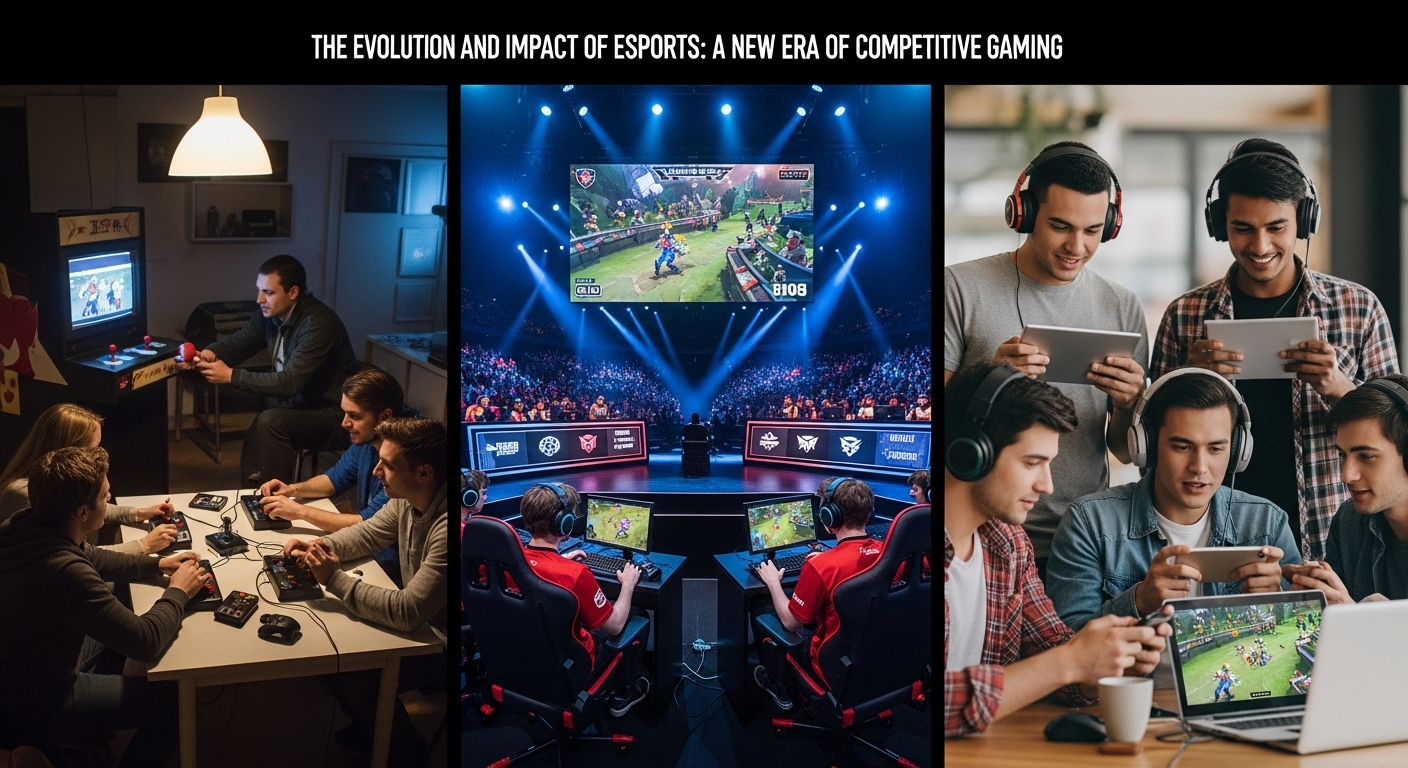
Introduction to the World of Esports
In the last two decades, the landscape of entertainment has undergone an extraordinary transformation. Among the many revolutions brought about by digital technology, esports stands out as one of the most significant and fastest-growing phenomena. Esports, short for electronic sports, refers to competitive video gaming where individuals or teams face off in various virtual arenas, often before massive audiences both online and offline. What began as small community competitions among gaming enthusiasts has evolved into a global industry attracting millions of players, spectators, sponsors, and investors.
The rise of esports is a reflection of the digital age’s impact on culture, technology, and the human desire for competition. Unlike traditional sports that rely on physical prowess, esports thrives on mental agility, strategy, teamwork, and precision. Today, esports tournaments fill stadiums, command global broadcasts, and award multi-million-dollar prize pools, making professional gaming one of the most dynamic career paths of the 21st century.
The Historical Roots of Esports
To understand the massive popularity of esports today, it is important to trace its origins. Competitive gaming has existed since the early days of video games in the 1970s. One of the first recorded gaming competitions took place in 1972 at Stanford University, where students competed in a game called Spacewar. The winner received a subscription to a science magazine, a humble prize compared to the millions earned by today’s esports champions.
The 1980s saw arcade gaming rise to prominence with titles such as Pac-Man, Donkey Kong, and Space Invaders. Players would compete for high scores, often posting their results publicly to gain recognition. This era laid the foundation for the spirit of digital competition. In the 1990s, the growth of home consoles and personal computers allowed more players to connect and compete. Games like Street Fighter II, Quake, and StarCraft introduced structured tournaments and the concept of professional gaming leagues.
However, it was the 2000s that marked the beginning of esports as we know it. With the advent of high-speed internet, online multiplayer gaming became accessible to the masses. Titles such as Counter-Strike, Warcraft III, and Dota helped create early competitive communities that would later grow into full-fledged organizations.
The Explosion of Esports in the Modern Era
The 2010s marked a turning point in the history of esports. This was the decade when competitive gaming moved from niche communities to mainstream recognition. Streaming platforms such as Twitch and YouTube Gaming played a major role in this transformation, allowing fans from around the world to watch their favorite players and teams live. Major tournaments like The International for Dota 2, the League of Legends World Championship, and the Fortnite World Cup attracted millions of viewers, rivaling traditional sports events in scale and excitement.
Professional players became celebrities, with fan bases that rivaled those of athletes and musicians. Sponsors from outside the gaming world, including car manufacturers, fashion brands, and tech giants, began to invest heavily in esports teams and events. Universities began offering esports scholarships, and countries started recognizing professional gaming as a legitimate sport.
The accessibility of esports also played a vital role in its expansion. Unlike traditional sports that require physical space, specific weather conditions, or expensive equipment, esports only requires a device, an internet connection, and skill. This inclusivity has enabled people from diverse backgrounds and regions to participate and excel.
The Esports Ecosystem: Players, Teams, and Organizations
At the heart of the esports industry lies a complex ecosystem that includes players, teams, game developers, organizers, sponsors, and fans. Each of these elements contributes to the growth and sustainability of the industry.
Professional esports players train rigorously, often putting in long hours of practice daily to refine their mechanics, strategies, and coordination. The top players are not just skilled gamers; they are dedicated athletes of the digital world who maintain strict schedules, mental training routines, and even physical fitness programs to ensure peak performance.
Esports teams operate much like traditional sports franchises. They scout and recruit talented players, provide coaching, and manage logistics such as travel and accommodation for tournaments. Major organizations like Team Liquid, Fnatic, and Cloud9 have become household names in the esports scene. These teams often compete across multiple game titles, diversifying their presence and building massive fan communities.
Game developers also play an essential role in shaping esports. Titles such as League of Legends, Dota 2, Valorant, and Overwatch are designed with competitive balance in mind. Developers actively maintain the games through patches, updates, and new content to ensure fairness and engagement. Esports organizations often work closely with developers to plan events, leagues, and global tournaments.
The Economic Power of Esports
The esports industry is now a multi-billion-dollar powerhouse. The revenue streams come from a variety of sources, including sponsorships, advertising, media rights, ticket sales, and merchandise. Major brands see esports as a gateway to reaching younger, tech-savvy audiences who are often less engaged with traditional media.
Tournaments attract huge sponsorship deals, with companies eager to associate themselves with the fast-paced and innovative image of esports. Prize pools continue to break records, with some events offering tens of millions of dollars in winnings. Streaming platforms generate massive advertising revenue, while content creators and influencers help promote games and events to a global audience.
Additionally, esports has given rise to new career opportunities beyond professional play. There are now commentators, analysts, coaches, event organizers, marketing professionals, and even psychologists specializing in esports performance. The industry’s growth has also inspired educational institutions to offer degrees and courses focused on esports management, marketing, and game development.
Esports and Technology: A Symbiotic Relationship
Technology has always been the backbone of esports, and its evolution continues to shape the industry’s future. High-performance gaming hardware, faster internet speeds, and advanced graphics have elevated the gaming experience to new heights. Virtual reality and augmented reality technologies promise to make esports even more immersive, allowing players and fans to interact with the virtual environment in unprecedented ways.
Artificial intelligence is also playing an increasing role in esports. AI-driven analytics tools are used to study player performance, analyze strategies, and improve decision-making. These tools provide data-driven insights that help teams develop tactics and identify weaknesses. Moreover, AI-powered bots are used for training, allowing players to practice against challenging opponents even when teammates are unavailable.
Cloud gaming is another frontier that may redefine esports accessibility. With the ability to stream high-quality games directly from servers, players no longer need expensive hardware to compete at a professional level. This technological advancement could democratize esports further, inviting more participation from regions previously limited by hardware constraints.
The Social and Cultural Impact of Esports
Beyond economics and technology, esports has become a powerful cultural force. It has reshaped how people socialize, communicate, and form communities. Online gaming platforms bring together millions of players from different parts of the world, fostering a sense of global connection.
Esports has also challenged traditional perceptions of what it means to be an athlete. The physical demands may differ from conventional sports, but the psychological pressure, reflexes, teamwork, and strategic thinking required in esports are no less intense. Many traditional sports organizations have recognized this, with football clubs, basketball teams, and even Olympic committees exploring esports divisions.
Moreover, esports has become a platform for diversity and inclusion. Gamers of all genders, nationalities, and backgrounds can compete on equal footing. Women’s esports leagues, youth programs, and community initiatives continue to expand, promoting opportunities and representation in an industry once dominated by a narrow demographic.
Challenges Facing the Esports Industry
Despite its success, esports faces several challenges that could shape its future trajectory. One major issue is player burnout. The intense training schedules, high expectations, and constant competition can take a toll on players’ mental and physical health. Unlike traditional sports, where athletes often have structured off-seasons, esports players compete year-round, leaving little time for recovery.
Another challenge lies in the governance and regulation of esports. Since it spans multiple countries and involves various game titles owned by private companies, there is no unified governing body. This lack of standardization leads to inconsistencies in rules, player contracts, and prize distributions. Efforts are being made to establish fairer systems, but the industry still has a long way to go.
Cheating and match-fixing also pose threats to esports integrity. While technology enables better detection systems, dishonest practices still occur. Maintaining transparency and trust within the esports community is essential for its continued legitimacy.
Finally, there is the question of sustainability. As esports grows, so do the costs associated with hosting large-scale events, maintaining servers, and supporting professional teams. Balancing profitability with fair competition and community engagement remains a complex challenge.
The Educational and Developmental Potential of Esports
Esports is not merely entertainment; it has significant educational and developmental value. Schools and universities around the world are incorporating esports programs to teach teamwork, leadership, and problem-solving skills. Competitive gaming requires communication, coordination, and critical thinking, all of which are transferable to real-world careers.
Esports also encourages technological literacy. Players develop familiarity with software, hardware, and online collaboration tools. Many young gamers discover career paths in computer science, design, and media production through their engagement with esports. Educators increasingly recognize the potential of esports as a tool for learning and personal growth.
Esports and the Future of Entertainment
As technology continues to advance, esports is likely to play an even greater role in the entertainment landscape. Virtual arenas and holographic displays could make live esports events more immersive. Viewers may one day experience tournaments through virtual reality, feeling as if they are inside the game itself.
Integration with other entertainment sectors such as music, film, and fashion will also expand. Major artists already perform at esports events, and collaborations between game developers and clothing brands are becoming common. Esports personalities may continue to influence culture in ways similar to movie stars or athletes, shaping trends and inspiring future generations.
Conclusion: The Infinite Horizon of Esports
Esports has grown from small-scale competitions into a global phenomenon that bridges technology, entertainment, and culture. Its evolution mirrors humanity’s ongoing journey toward digital integration, where boundaries between the physical and virtual worlds continue to blur.
The story of esports is still being written. What began as friendly matches among hobbyists has transformed into a professional, billion-dollar industry that captures the imagination of millions. Yet, beyond the money and fame, esports represents something deeper—the universal human desire to compete, connect, and create.
As the industry matures, it will continue to challenge conventions, foster innovation, and redefine what it means to be an athlete in the digital age. Whether you are a player, a fan, or a curious observer, one thing is certain: esports is not a passing trend. It is the future of competition, and its potential is as vast and limitless as the digital worlds it inhabits.