
Introduction
In the past few decades, the world of entertainment has undergone a digital revolution. Traditional forms of media, such as television and print, have gradually given way to online platforms, social media, and streaming. Among these changes, one particular trend has surged to the forefront of popular culture — Esports. Once considered a small, underground community of competitive gamers, Esports has now transformed into a billion-dollar global industry, captivating audiences from every corner of the world.
The journey of Esports is a fascinating one, encompassing technological evolution, cultural shifts, and the redefinition of what it means to be an athlete. This blog takes an in-depth look at how Esports grew from humble beginnings into a global powerhouse, exploring its history, structure, challenges, and bright future.
The Early Roots of Competitive Gaming
To understand the rise of Esports, it’s essential to trace its roots back to the earliest days of video gaming. The concept of competitive gaming can be dated as far back as the 1970s, when arcades were filled with players competing for high scores on titles like Space Invaders and Pac-Man.
The first officially recorded video game competition took place in 1972 at Stanford University, where students competed in a game called Spacewar! for a grand prize of a year’s subscription to Rolling Stone magazine. Though modest by modern standards, this event marked the first time video games were viewed through a competitive lens.
The 1980s saw the rise of arcade tournaments and national competitions. Companies like Atari hosted massive events such as the Space Invaders Championship in 1980, which drew over 10,000 participants. Gaming magazines began to highlight high scores, and early television shows occasionally featured video game challenges.
However, the competitive gaming scene of this era was still small-scale and lacked the infrastructure that would later define Esports. Players competed for glory rather than for significant financial rewards. Yet, this period laid the foundation for the spirit of competition that continues to drive Esports today.
The Birth of Online Multiplayer Gaming
The 1990s ushered in a technological leap that would change gaming forever — the rise of the internet. With the increasing availability of home computers and improved connectivity, gamers could now compete with others across the globe without ever leaving their homes.
Games like Doom, Quake, and StarCraft became synonymous with the early days of online competitive play. LAN parties, where players would bring their computers together in one location to connect locally, became social and competitive gatherings that predated today’s massive online tournaments.
The first professional gaming leagues also began to appear during this decade. The Cyberathlete Professional League (CPL), founded in 1997, was one of the earliest organizations to promote gaming as a legitimate competition. It hosted tournaments for games like Quake and Counter-Strike, awarding cash prizes and attracting sponsorships.
In South Korea, Esports was beginning to take on a life of its own. Following the 1997 Asian financial crisis, the South Korean government invested heavily in broadband internet infrastructure. This decision inadvertently turned the country into the epicenter of Esports culture. Television networks began broadcasting live matches of StarCraft, and professional gamers became national celebrities.
This period marked the birth of Esports as a formalized industry — complete with teams, sponsors, and fans.
The 2000s: The Professional Era Begins
By the early 2000s, Esports had begun to solidify its presence in both the East and West. Games like Counter-Strike 1.6, Warcraft III, and Halo established competitive scenes that attracted passionate communities. The rise of broadband internet made online play more accessible, allowing for global competition on an unprecedented scale.
During this era, several key events and organizations emerged that shaped the modern Esports landscape. The World Cyber Games (WCG), Electronic Sports World Cup (ESWC), and Major League Gaming (MLG) all played pivotal roles in legitimizing Esports on an international level.
Players were no longer just enthusiasts; they were professionals who trained for hours daily, analyzing strategies and perfecting their gameplay. Sponsors and brands began to recognize the marketing potential of reaching young, tech-savvy audiences through Esports. Prizes started reaching hundreds of thousands of dollars — a significant leap from the humble beginnings of arcade competitions.
However, the 2000s also revealed growing pains. Infrastructure varied widely between countries, and the perception of gaming as a “real” sport was still met with skepticism. Despite these hurdles, the Esports community continued to grow, fueled by the shared passion of its players and fans.
The Streaming Revolution and Global Explosion
If the 2000s built the foundation for Esports, the 2010s were the decade it truly exploded. The key catalyst behind this surge was streaming technology. Platforms such as Twitch, launched in 2011, allowed anyone to broadcast gameplay live to audiences worldwide. This accessibility fundamentally changed how fans engaged with Esports.
No longer limited to attending tournaments or watching recorded matches, fans could now follow their favorite players in real time, chat with them, and become part of an interactive community. The popularity of games like League of Legends, Dota 2, and Counter-Strike: Global Offensive propelled viewership to record-breaking levels.
League of Legends, in particular, became a global phenomenon. Its annual World Championship attracted millions of viewers and offered multimillion-dollar prize pools. Similarly, Valve’s The International, centered around Dota 2, became one of the most lucrative Esports tournaments in history, with crowdfunding contributing to prize pools exceeding $30 million.
Traditional media and corporations began to take notice. Major companies like Coca-Cola, Intel, and Red Bull invested heavily in Esports sponsorships. Universities launched Esports programs and scholarships, recognizing the value of competitive gaming as both an academic and professional pursuit.
Esports was no longer a subculture — it had entered the mainstream.
The Structure of the Modern Esports Ecosystem
The Esports industry today is a complex ecosystem that mirrors many aspects of traditional sports. It consists of multiple interconnected components, including players, teams, organizations, leagues, sponsors, broadcasters, and fans.
Players and Teams form the core of this ecosystem. Professional gamers are signed to contracts, receive salaries, and often have coaches, analysts, and support staff. Top-tier organizations like Team Liquid, Cloud9, Fnatic, and T1 operate much like professional sports clubs, complete with management, branding, and merchandising.
Leagues and Tournaments serve as the stage for competition. Some games, such as Overwatch and Call of Duty, have adopted franchise-based leagues similar to traditional sports models. Others, like Counter-Strike and Dota 2, maintain open tournament systems that allow for greater flexibility and diversity of competition.
Sponsors and Brands play a crucial role in sustaining the industry financially. Their investment covers everything from prize pools to event production and team salaries. Meanwhile, broadcasters and streaming platforms provide the means for millions of fans to watch matches live.
Finally, fans are the lifeblood of Esports. From online communities and forums to massive in-person events like the League of Legends Worlds Finals, the passion and engagement of Esports audiences have elevated the industry to unprecedented heights.
The Economics of Esports
The economic growth of Esports has been nothing short of staggering. In less than two decades, the industry has grown from grassroots competitions to a multibillion-dollar global market. Revenue streams include sponsorships, advertising, ticket sales, media rights, and merchandise.
Prize pools have also reached record levels. Major tournaments regularly offer millions of dollars in rewards, attracting talent from around the world. Esports organizations now function as legitimate businesses, with valuations in the tens or even hundreds of millions.
A significant factor behind this growth is the digital-native audience. Unlike traditional sports fans, Esports viewers are primarily young, tech-savvy, and highly engaged online. This demographic is highly attractive to advertisers, as they represent the next generation of consumers.
However, the Esports economy also faces challenges. Revenue distribution can be uneven, with top-tier games and organizations capturing the majority of profits. Many smaller tournaments and teams struggle to sustain themselves financially. As the industry matures, finding a sustainable balance between profitability and inclusivity remains an ongoing concern.
The Cultural Impact of Esports
Beyond economics, Esports has had a profound cultural impact. It has reshaped the way society views gaming, competition, and community. What was once dismissed as a solitary or unproductive pastime has become a legitimate form of entertainment, creativity, and even career development.
Esports has also played a vital role in global connectivity. Players and fans from different countries interact, compete, and collaborate in ways that transcend language and geography. International tournaments foster cross-cultural exchange, promoting understanding and friendship through shared passion.
Moreover, Esports has given rise to a new breed of celebrity — the professional gamer. Figures like Faker, s1mple, and Ninja have achieved fame and recognition on par with traditional athletes and entertainers. They inspire millions of young players who dream of turning their hobby into a profession.
In addition, Esports has contributed to the evolution of digital media. Streaming, content creation, and social engagement are now integral parts of the entertainment landscape. The influence of Esports extends beyond competition; it has become a cultural movement that shapes music, fashion, and lifestyle.
Esports and Education
In recent years, Esports has made significant strides in the field of education. Schools and universities around the world have begun incorporating Esports programs, both as extracurricular activities and as formal academic disciplines.
These programs teach students not only gaming skills but also teamwork, strategy, communication, and leadership. They encourage problem-solving, critical thinking, and collaboration — qualities that are valuable far beyond the virtual arena.
Some universities even offer Esports scholarships, treating top players similarly to athletes in traditional sports. Courses on game design, event management, and digital marketing are helping students build careers in the rapidly expanding Esports industry.
This integration of gaming into education signals a broader acceptance of Esports as a legitimate and valuable pursuit, blurring the lines between entertainment, education, and career development.
Challenges Facing the Esports Industry
Despite its success, the Esports industry is not without challenges. One of the most pressing issues is player burnout. Professional gamers often train for long hours, sometimes exceeding twelve hours a day. The intense schedule can lead to physical and mental fatigue, shortening careers and raising concerns about player welfare.
Regulation and governance also pose difficulties. Unlike traditional sports, Esports lacks a universal governing body. Rules, standards, and ethical guidelines vary between games and organizations, leading to inconsistencies and controversies.
Cheating and match-fixing remain ongoing threats to competitive integrity. As prize pools and stakes increase, the temptation for unethical behavior also grows. Ensuring fair play and transparency is vital to maintaining the credibility of Esports.
Additionally, gender diversity remains a challenge. While women have made significant contributions to gaming, female representation in professional Esports remains low. Addressing gender bias, harassment, and inclusivity is crucial for building a healthier and more equitable environment.
Finally, the industry must navigate monetization ethics — balancing commercial interests with the integrity of the gaming experience. Overreliance on sponsorships, loot boxes, or microtransactions can alienate fans and damage trust.
The Future of Esports
Looking ahead, the future of Esports appears bright and full of potential. As technology continues to advance, new platforms and innovations are poised to transform the industry even further.
Virtual reality (VR) and augmented reality (AR) could revolutionize how audiences experience Esports, offering immersive and interactive viewing. Artificial intelligence (AI) could enhance player training, analytics, and audience engagement.
The integration of blockchain and digital collectibles may also reshape ownership and monetization models within Esports ecosystems.
Moreover, Esports is expected to play a larger role in mainstream sports culture. It has already been featured as a medal event in regional tournaments like the Asian Games, and discussions continue about its potential inclusion in future Olympic events.
With its global audience, youthful demographic, and limitless creative possibilities, Esports is not just a trend — it’s a cornerstone of modern entertainment that will continue to evolve and inspire for generations to come.
Conclusion
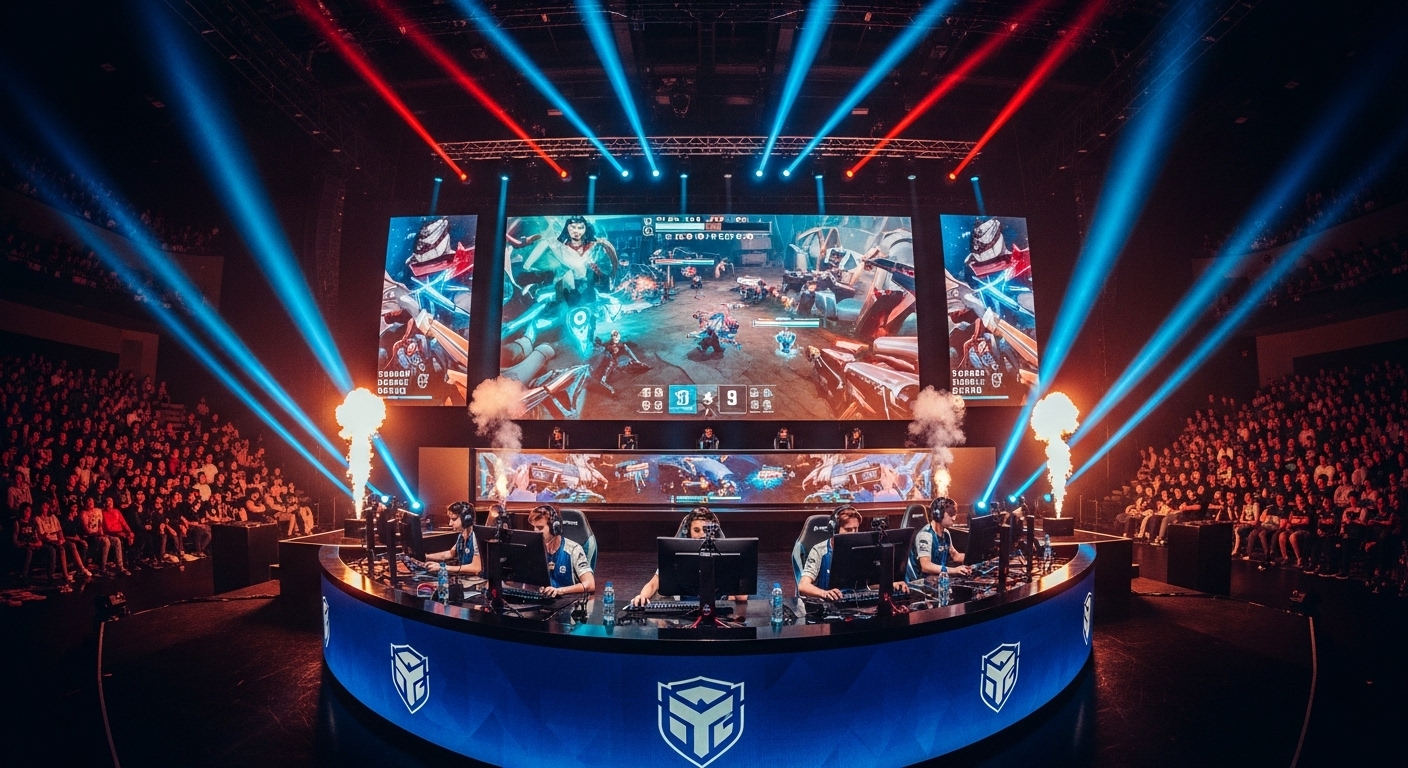
From its humble origins in arcades and college dorms to massive stadiums filled with cheering fans, Esports has undergone one of the most remarkable transformations in modern history. It represents the convergence of technology, creativity, and competition in a way that transcends cultural and geographical boundaries.
Esports is no longer just about games; it’s about people, passion, and progress. It has created new careers, new communities, and a new global culture that thrives on innovation and inclusivity.
As we look toward the future, one thing is clear: Esports is here to stay. It is not merely the next chapter in gaming — it is a defining chapter in the story of our digital age.