
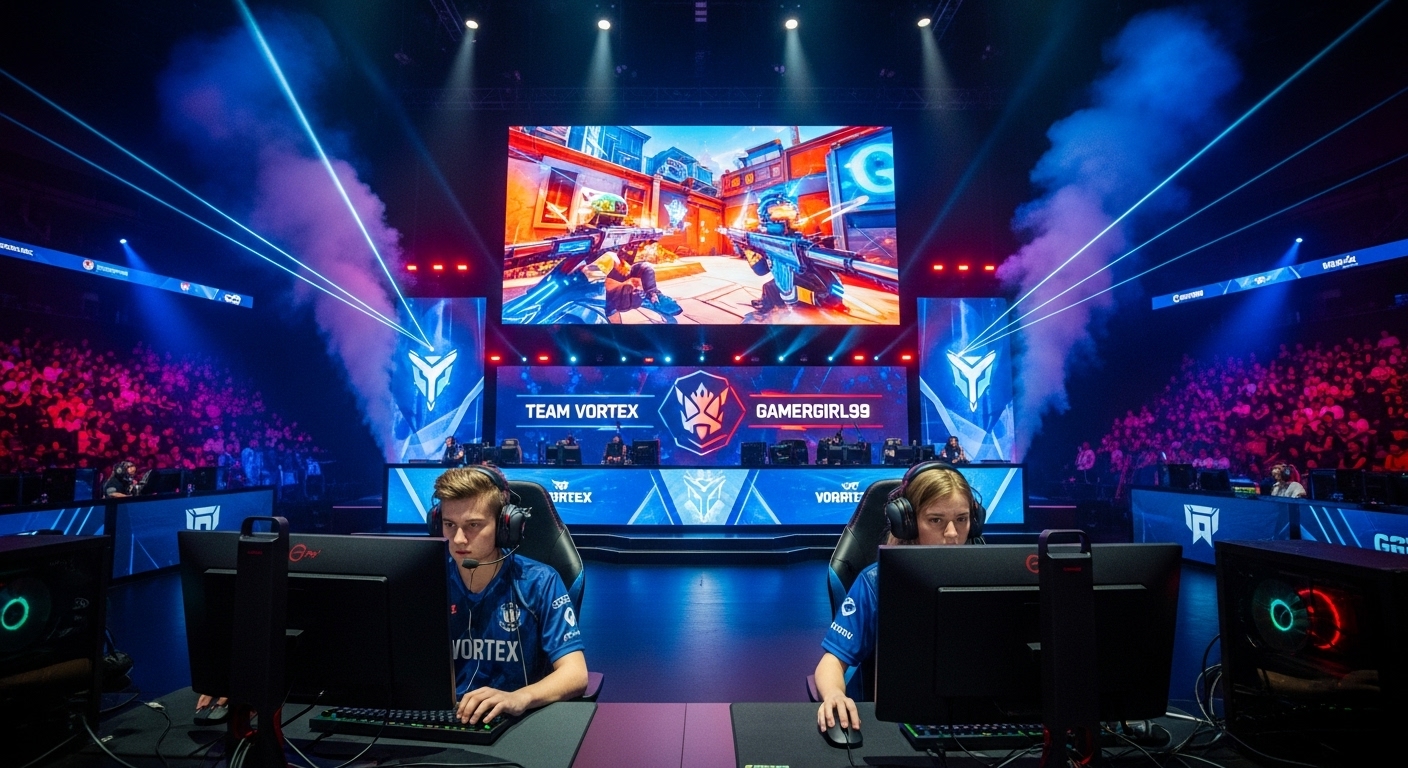
eSports has emerged as one of the most exciting and fastest-growing segments of the global entertainment landscape. What once started as casual gaming tournaments held in small rooms has now become a multi-billion-dollar industry that draws millions of viewers and players from around the world. The rise of eSports has not only changed the way people perceive gaming but has also transformed the digital space into a legitimate, competitive arena that rivals traditional sports. This blog post delves into the phenomenon of eSports, exploring its origins, growth, and future.
The Rise of eSports: From Hobby to Global Phenomenon
The roots of eSports can be traced back to the late 1990s and early 2000s when multiplayer games like StarCraft, Quake, and Counter-Strike began gaining popularity. Initially, these games were played in small LAN (Local Area Network) parties, where groups of friends would gather and compete against each other. These informal gatherings soon evolved into larger-scale competitions, with the first official eSports tournaments beginning to emerge.
As the internet became more accessible, gaming communities flourished online. By the mid-2000s, online platforms like Twitch and YouTube allowed players to broadcast their gameplay to a global audience, leading to the creation of a new form of entertainment: professional gaming. As viewership grew, so did the investment from major brands, leading to the sponsorship of teams, tournaments, and individual players.
The industry’s explosion was further catalyzed by the growing popularity of games like League of Legends, Dota 2, and Fortnite, each of which brought millions of players and fans into the fold. Tournaments for these games saw prize pools that reached into the millions, and live events were attended by thousands of people, further cementing eSports as a mainstream phenomenon.
The Mechanics of eSports: What Makes It So Compelling?
What sets eSports apart from traditional sports is its unique blend of digital entertainment and skill-based competition. At the heart of eSports lies a wide variety of games, each offering a different style of play and requiring distinct strategies. Whether it’s the teamwork and tactical depth of League of Legends, the fast-paced action of Counter-Strike: Global Offensive, or the battle royale format of Fortnite, eSports has something for every kind of gamer.
Another key factor in the growth of eSports is the accessibility of competitive gaming. Unlike traditional sports, which often require specialized training, expensive equipment, and access to physical spaces, eSports can be enjoyed by anyone with a gaming setup and an internet connection. This has opened the door for players from all backgrounds and regions to participate, creating a truly global community of eSports enthusiasts.
eSports also thrives on its spectator experience. Watching a high-level eSports tournament is often as thrilling as any traditional sports match. With professional commentators, live-streaming platforms, and social media engagement, fans can feel connected to the action in real-time. The interaction between players, commentators, and fans creates an atmosphere of excitement and energy, making eSports not just a game, but an event.
The Professionalization of eSports: Teams, Leagues, and Careers
What began as a hobby for many gamers has now become a legitimate career path. Professional eSports players train and compete just like athletes in traditional sports. They spend countless hours practicing, analyzing game footage, and refining their strategies to maintain a competitive edge. As eSports grew, so did the need for more organized teams and leagues.
Major eSports organizations now operate in a similar fashion to traditional sports franchises. These organizations scout and recruit top players, hire coaches and analysts, and provide team management and support. The biggest eSports teams today, like Cloud9, Team Liquid, and Fnatic, are highly structured and operate across multiple games, similar to professional sports teams that field players in football, basketball, or soccer.
In addition to traditional team-based games, individual players can now make a career by streaming their gameplay, participating in online tournaments, and engaging with fans through platforms like Twitch and YouTube. Many top players have built substantial followings, earning income through sponsorships, merchandise sales, and direct donations from their fans.
eSports has also led to the rise of college leagues and scholarships, creating even more opportunities for young talent to enter the professional scene. Universities around the world are recognizing the potential of eSports and offering full scholarships to promising players, much like they would to athletes in traditional sports.
eSports Tournaments: The Thrills of Competitive Gaming
eSports tournaments are the heart and soul of the industry. These events not only bring together the best players in the world but also create an electric atmosphere that fans can enjoy in person or via live streams. The prize pools at major eSports events have skyrocketed in recent years, with games like Dota 2 offering prize money that rivals some of the largest sports competitions in the world.
For example, The International (the world championship for Dota 2) is famous for its massive prize pool, which often exceeds $30 million, with a significant portion of the money raised through crowd funding by the community. Other popular tournaments include the League of Legends World Championship, the Overwatch League, and Fortnite World Cup. These events often feature live broadcasts with professional commentators and analysis, providing an immersive experience for viewers.
The growth of eSports tournaments has also led to the development of dedicated venues. Major cities around the world now host live eSports events in large arenas, which can hold thousands of spectators. Fans attend not just for the competition but for the full experience—cheering for their favorite teams, meeting players, and engaging with fellow fans.
Sponsorship and the Business Side of eSports
Like traditional sports, eSports has attracted a wide range of corporate sponsorships, partnerships, and advertising deals. Companies from the gaming industry, such as Intel and Razer, as well as non-endemic brands like Coca-Cola and Mercedes-Benz, are heavily invested in the eSports scene. These brands sponsor teams, players, and tournaments, further legitimizing eSports as a major form of entertainment.
The business model behind eSports is diverse and sustainable, with income streams coming from sponsorships, broadcasting rights, ticket sales, merchandise, and crowdfunding. Broadcasting rights, in particular, have played a crucial role in driving revenue. Major eSports tournaments are often broadcasted on platforms like Twitch, YouTube, and even traditional TV networks in some regions, allowing fans to watch live events from anywhere in the world.
In addition to sponsorships and advertising, eSports has introduced new forms of monetization, including in-game purchases, subscriptions, and donation-based platforms like Patreon. This variety of revenue sources has allowed the industry to thrive and continue growing year after year.
The Cultural Impact of eSports
The rise of eSports has not only changed the way we think about gaming but also how we define culture in the digital age. eSports has created a global community of passionate fans who celebrate the skill and dedication of their favorite players and teams. The connections between players and fans are deeper than ever before, with social media allowing fans to interact with players in real-time, share their experiences, and create content around their favorite games.
This connection has also led to the rise of eSports-related content, including tutorials, behind-the-scenes videos, and fan-made edits, which help expand the eSports ecosystem. eSports has become an integral part of digital culture, influencing everything from music and fashion to technology and social movements.
Moreover, eSports has made gaming a more inclusive space, with more women and people from diverse backgrounds participating in both the professional and amateur scenes. Initiatives and organizations are working to ensure that eSports remains an open and welcoming space for players of all genders and ethnicities, helping to diversify the competitive gaming landscape.
The Future of eSports: What’s Next?
The future of eSports looks incredibly promising, with continued growth expected in both participation and viewership. As gaming technology evolves, so too will the experiences that players and viewers have. Virtual reality (VR) and augmented reality (AR) are expected to revolutionize the way we experience eSports, allowing players to interact with their games in new and immersive ways. The next generation of gaming consoles and high-performance PCs will push the boundaries of competitive play, enabling faster, more responsive, and visually stunning games.
Furthermore, the global reach of eSports will continue to expand, with more countries and regions embracing competitive gaming. eSports is already a huge industry in Asia, particularly in South Korea and China, but its presence in North America, Europe, and even Latin America and Africa is rapidly growing. The Olympics has even considered including eSports as a potential medal event in future Games, signaling the increasing recognition of competitive gaming as a legitimate sport.
Conclusion: eSports is Here to Stay
eSports has firmly established itself as a dominant force in the entertainment world. From humble beginnings in local gaming events to becoming a multi-billion-dollar industry, it has grown into a global cultural phenomenon. The future of eSports looks bright, with technological advancements, increased investment, and the continued development of global fanbases shaping the next chapter.
For players, fans, and businesses alike, eSports offers exciting opportunities for growth, connection, and success. Whether you’re an aspiring gamer, a team manager, or a brand looking to tap into the world of competitive gaming, the eSports industry is one to watch—and be a part of—going forward.