
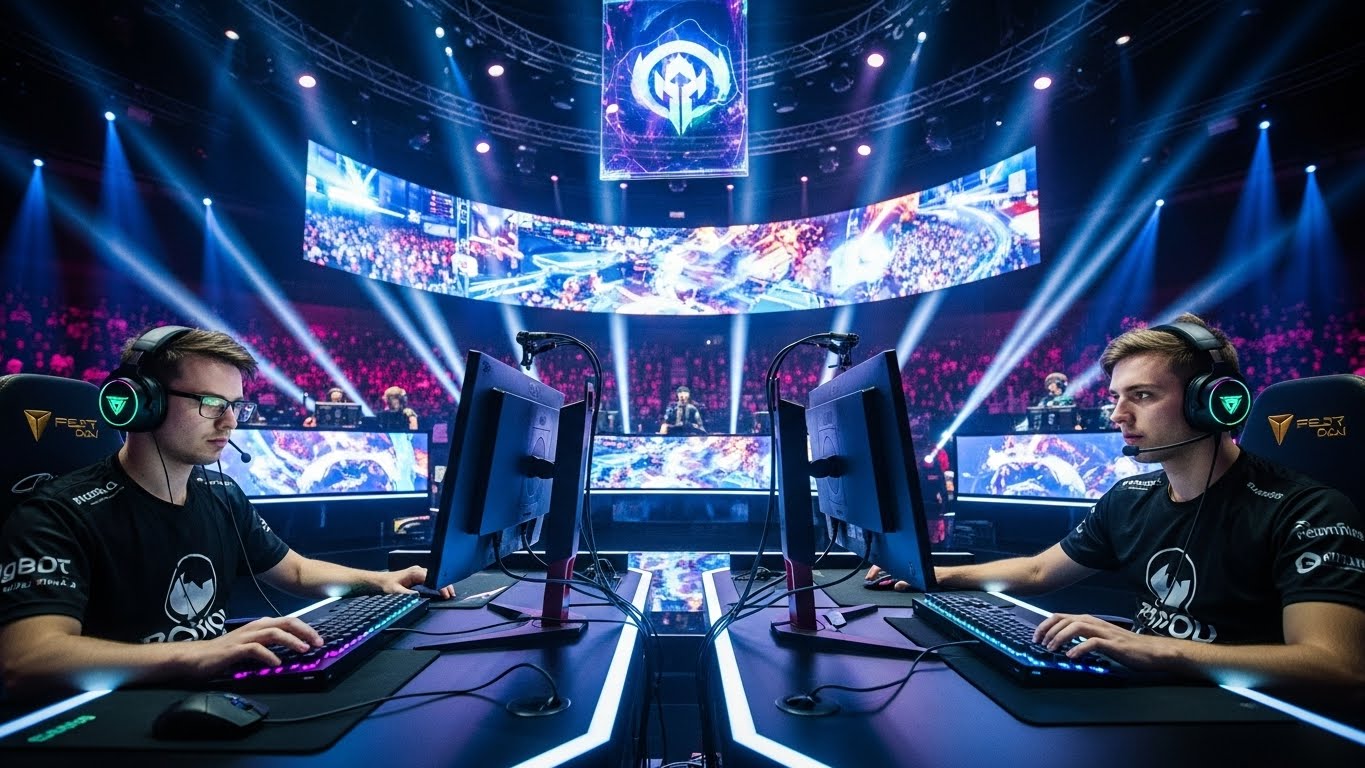
The world of competitive gaming, known as esports, has transformed from a niche hobby into a global phenomenon. Once dismissed as a pastime for teenagers in basements, esports has emerged as a multi-billion-dollar industry attracting professional players, massive audiences, and significant investment. With tournaments filling arenas, sponsorship deals rivaling traditional sports, and streaming platforms broadcasting live competitions worldwide, esports is no longer just a game; it’s a cultural revolution. This blog explores the rise of esports, its impact on players and audiences, the business behind it, and the future of this fast-growing industry.
The Evolution of Esports
Esports, short for electronic sports, refers to competitive video gaming where individuals or teams compete at professional levels. The origins of esports can be traced back to the late 1970s and early 1980s with arcade competitions and early console tournaments. Games like Space Invaders and Pac-Man attracted competitive players, but it wasn’t until the late 1990s and early 2000s, with the rise of real-time strategy games like StarCraft and first-person shooters like Counter-Strike, that esports started to gain serious attention.
The growth of the internet and online multiplayer games played a crucial role in connecting players worldwide. LAN (Local Area Network) tournaments evolved into massive online competitions, enabling fans to watch their favorite players compete from anywhere. Today, esports spans multiple genres, including MOBA (Multiplayer Online Battle Arena) games like League of Legends, battle royale games such as Fortnite, and sports simulations like FIFA. Each genre has cultivated its own fan base and competitive scene, contributing to the overall expansion of esports.
The Competitive Landscape
Professional esports competitions have become highly organized, with structured leagues, teams, and sponsorships. Major tournaments now offer prize pools in the millions, drawing top-tier talent from around the globe. One notable example is the League of Legends World Championship, which attracts millions of viewers and offers multi-million-dollar prizes to winning teams. Similarly, Dota 2’s annual International tournament boasts one of the largest prize pools in esports history, often surpassing tens of millions of dollars.
Esports players train like traditional athletes, dedicating hours daily to practice, strategy, and teamwork. Physical fitness, mental focus, and communication skills are just as crucial as gaming talent. Teams employ coaches, analysts, and psychologists to ensure players perform at their best under high-pressure scenarios. This level of professionalism underscores the legitimacy of esports as a serious competitive sport.
The Role of Streaming and Content Platforms
Streaming platforms have been instrumental in the meteoric rise of esports. Services that allow fans to watch live competitions and interact with players in real-time have created a unique ecosystem for engagement. Streaming not only boosts visibility for professional players and tournaments but also allows aspiring gamers to showcase their skills and build personal brands.
Platforms dedicated to game streaming have cultivated entire communities where fans can discuss strategy, share highlights, and engage with esports culture. Content creators often supplement competitive play with entertaining commentary, tutorials, and behind-the-scenes insights, making esports accessible to both hardcore fans and casual viewers. This interactive approach has created a more engaged and loyal audience compared to traditional sports broadcasting.
Economic Impact and Investment
The financial growth of esports has been nothing short of remarkable. Global revenue from esports has surged into billions, driven by sponsorship deals, advertising, media rights, merchandise sales, and ticketed events. Brands outside the gaming industry, including apparel, energy drinks, and tech companies, have recognized the value of esports audiences, leading to lucrative partnerships.
Esports franchises operate much like traditional sports teams, with player salaries, training facilities, and branding strategies. Investors see esports as a promising long-term market due to its young, tech-savvy audience and rapid growth potential. Cities and countries have also embraced esports, hosting international tournaments to attract tourism and boost local economies. This convergence of entertainment, business, and culture demonstrates that esports is more than just gaming; it is a thriving industry with widespread economic influence.
The Psychology of Competitive Gaming
Competitive gaming demands more than technical skill; it requires strong mental resilience. Players face intense pressure to perform, with their reputation, career, and financial rewards on the line. Esports athletes often experience stress, fatigue, and burnout due to long hours of practice and high-stakes competitions. Mental health awareness has become a critical topic within the esports community, with teams employing psychologists and wellness coaches to support player well-being.
Moreover, the psychological aspect of esports extends to teamwork and communication. Success in team-based games relies heavily on coordination, strategy, and the ability to adapt under pressure. Players must maintain composure, manage emotions, and make split-second decisions, highlighting that esports is as much a mental challenge as it is a physical one.
Esports and Education
The influence of esports has even reached the educational sector. Schools and universities around the world are establishing esports programs, scholarships, and dedicated facilities for competitive gaming. These programs aim to develop skills such as critical thinking, teamwork, leadership, and digital literacy, which are valuable both in esports and in traditional careers.
Collegiate esports leagues provide students with opportunities to compete at high levels while pursuing academic goals. These programs also help legitimize esports as a viable career path and offer guidance for those seeking professional opportunities within the industry. The integration of esports into education signals a shift in societal perceptions, recognizing competitive gaming as a meaningful and productive activity.
Diversity and Inclusion in Esports
While esports continues to grow, the industry faces challenges related to diversity and inclusion. Historically dominated by male players, esports is gradually seeing increased participation from women and underrepresented communities. Initiatives promoting inclusivity aim to create a welcoming environment for all players and fans.
Representation matters, and esports organizations are beginning to acknowledge the need for equitable opportunities, mentorship programs, and safe spaces. By fostering diversity, esports can tap into a broader talent pool, enrich the community, and set an example for other industries navigating issues of equity and inclusion.
The Future of Esports
The future of esports promises even greater growth and innovation. Emerging technologies such as virtual reality (VR) and augmented reality (AR) are expected to create new immersive experiences for players and fans alike. These technologies could redefine how competitions are held, how audiences engage, and how games are played, offering fresh opportunities for creativity and entertainment.
Mobile esports is another rapidly expanding sector. With the proliferation of smartphones and mobile gaming apps, competitive gaming is becoming more accessible globally. Countries with high mobile penetration rates are experiencing surges in esports participation and viewership, further expanding the industry’s reach.
Esports may also intersect with traditional sports, creating hybrid experiences and collaborations. Professional sports leagues are exploring esports competitions as a way to engage younger audiences, merge fan bases, and diversify entertainment offerings. This convergence signals that esports will continue to gain mainstream recognition as an integral part of the global sports and entertainment landscape.
Preparing for a Career in Esports
For those aspiring to enter the esports industry, preparation is key. Professional players must hone technical skills, develop strategic thinking, and prioritize physical and mental health. However, esports offers a wide range of career opportunities beyond gameplay. Roles in management, marketing, coaching, broadcasting, game development, and event organization are critical to supporting the ecosystem.
Networking, continuous learning, and understanding industry trends are essential for anyone looking to succeed in esports. As the industry evolves, adaptability and creativity will be vital skills, ensuring that professionals can thrive in a competitive and rapidly changing environment.
Conclusion
Esports has evolved far beyond casual gaming, establishing itself as a legitimate, professional, and highly influential industry. From competitive tournaments and streaming platforms to economic impact and educational initiatives, esports is reshaping how we view gaming, entertainment, and competition. It challenges traditional notions of sport, celebrates skill and strategy, and provides opportunities for global connection and collaboration.
As technology continues to advance and audiences expand, the esports industry is poised for further growth and innovation. By embracing inclusivity, supporting mental health, and investing in infrastructure and talent, esports can continue to flourish as a dynamic, multifaceted industry. Competitive gaming is no longer just a pastime; it is a cultural force, a business powerhouse, and a symbol of the digital era’s limitless possibilities. The world of esports is only getting started, and its impact will be felt for generations to come.