
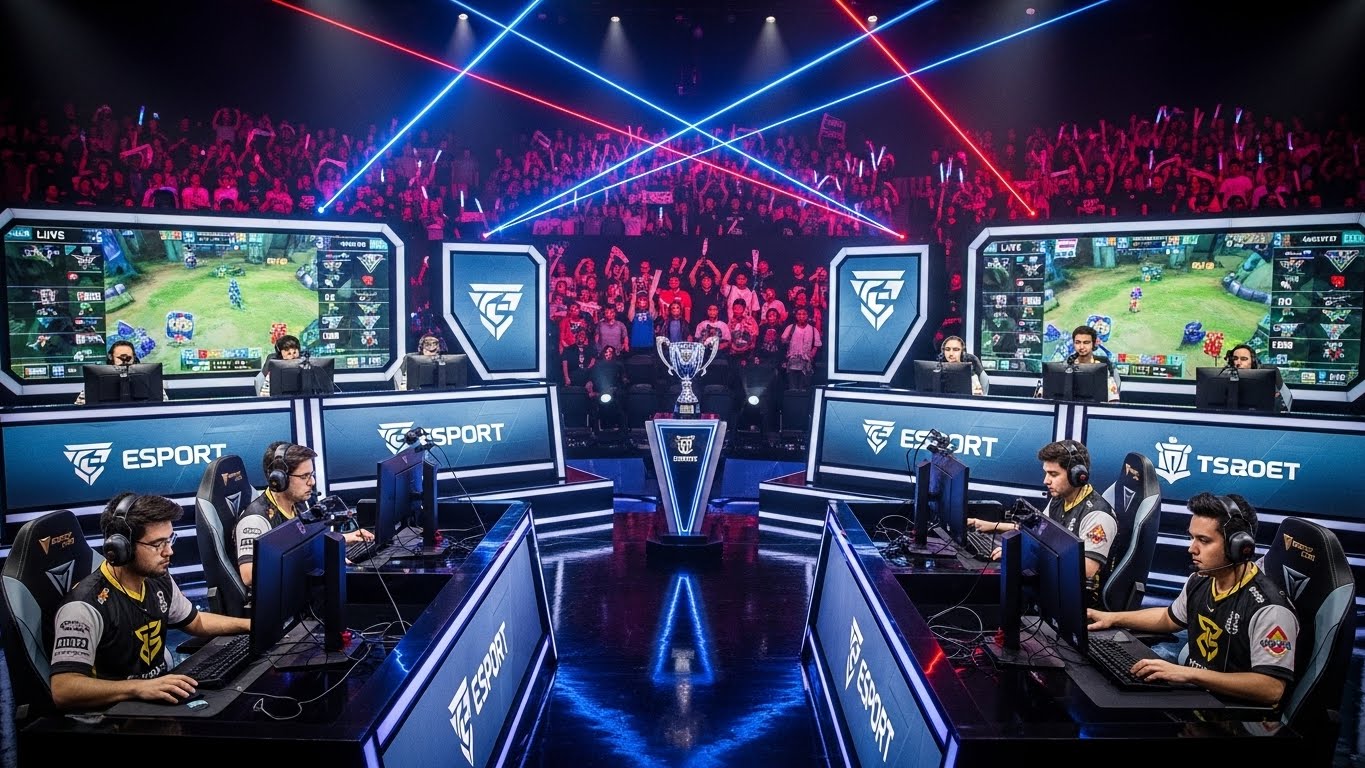
Esports, short for electronic sports, is no longer just a niche subculture—it has become a global phenomenon. What once started as a hobby for a few passionate gamers has transformed into a multi-billion-dollar industry, with millions of fans, professional players, and massive tournaments that attract millions of viewers. This blog explores the meteoric rise of esports, its impact on traditional sports, its economic influence, and what the future holds for this digital revolution.
The Birth of Esports: From Local Competitions to Global Arenas
Esports has a rich and diverse history that spans several decades. The origins of competitive gaming can be traced back to the 1970s and 1980s when arcade games like Pong and Space Invaders started drawing attention. However, it wasn’t until the late 1990s and early 2000s that esports began to take a more recognizable form.
In the early days, esports competitions were relatively small-scale events held in local arcades, colleges, or gaming lounges. Games like Quake and StarCraft were some of the first to see organized competitions. It was the launch of StarCraft in 1998 that marked a significant turning point. The game’s competitive community in South Korea helped cement the idea of esports as a legitimate, organized sport. Over time, South Korea became the undisputed epicenter of competitive gaming, with players becoming household names and competitions drawing thousands of spectators.
As broadband internet became more widespread, online gaming started to gain popularity, further fueling the esports explosion. Titles such as League of Legends, Counter-Strike, and Dota 2 played pivotal roles in shaping the modern esports landscape.
The Global Appeal: From Niche to Mainstream
What was once a hobby for a dedicated few has now exploded into a global cultural phenomenon. Esports has expanded across continents, gaining a massive following in North America, Europe, and Asia. One of the main drivers behind this growth is the accessibility of gaming. With platforms like Twitch, YouTube Gaming, and various social media channels, fans are no longer limited by geography when it comes to watching their favorite teams and players. Esports content is now streamed live, reaching millions of viewers worldwide.
Another factor contributing to the mainstream appeal of esports is the increasing professionalism of the industry. Organizations and brands are now investing heavily in esports, treating it like any other professional sport. Teams are signed to sponsorships, players have contracts, and events are broadcasted on television and online platforms. The level of organization and professionalism now mirrors traditional sports leagues like the NFL, NBA, or UEFA Champions League.
The Esports Ecosystem: Players, Teams, and Tournaments
The esports ecosystem is complex, with many moving parts that work in harmony to make the industry thrive. At its core, there are three main pillars: players, teams, and tournaments.
Players: The Stars of the Show
Esports players have become celebrities in their own right. With millions of fans watching their every move, esports players are expected to perform at an exceptionally high level, often training for hours each day. These athletes hone their skills in a variety of games, including Fortnite, Valorant, Call of Duty, League of Legends, and Dota 2. Professional players are often known for their precision, strategy, and ability to make split-second decisions in high-stress situations.
The life of a professional esports player is intense. They spend hours practicing, studying game mechanics, and strategizing with their team. Players also need to maintain their mental and physical health, as the mental demands of competitive gaming are immense. Esports players are also part of a larger ecosystem, where they interact with coaches, analysts, and team managers who help them refine their gameplay.
Esports players earn their income through a combination of tournament winnings, sponsorships, and streaming revenues. The most successful players, like Ninja and Faker, have turned their passion into lucrative careers, earning millions annually.
Teams: Building a Winning Roster
Just like in traditional sports, esports teams are at the heart of the competitive scene. The structure of an esports team is similar to that of a professional sports organization. Teams are made up of players, coaches, analysts, and management staff. Some of the most well-known esports organizations include Cloud9, Team Liquid, T1, and Fnatic. These teams compete in various leagues, tournaments, and championships, hoping to secure the top spots and significant financial rewards.
Building a successful team in esports is no different from any traditional sports team. The management scouts and recruits talented players, and then the team works together to build synergy and strategy. A great team requires chemistry, communication, and trust. Some teams also have special trainers who focus on mental fitness and stress management, as these factors play a huge role in an esports player’s performance.
Tournaments: The Pinnacle of Competitive Gaming
Tournaments are the lifeblood of the esports industry. These events bring together the best players and teams in the world to compete for glory and substantial prize pools. Major tournaments like The International (Dota 2), Worlds (League of Legends), and ESL One (CS: GO) attract massive viewership numbers and are broadcast globally. These tournaments are held in large arenas or broadcast online, allowing fans to experience the action in real time.
Prize pools in esports are staggering. The prize pool for The International 2021 exceeded $40 million, and other major events also boast multi-million-dollar prize pools. Beyond the monetary rewards, winning a prestigious tournament can catapult a player or team to international stardom, cementing their legacy in the gaming world.
The competitive nature of esports has also led to the creation of professional leagues. Leagues like the League of Legends Championship Series (LCS) and Overwatch League (OWL) operate on a franchise model, where organizations purchase teams to compete in a year-round competition. These leagues have become a staple of the esports calendar and are broadcasted on major platforms, further blurring the lines between esports and traditional sports.
The Economic Impact of Esports
Esports has evolved into a lucrative industry with an impressive economic footprint. According to recent industry reports, esports generated over $1 billion in revenue in 2021, with expectations for future growth. The primary revenue streams for esports organizations come from media rights, sponsorships, merchandise, ticket sales, and, of course, tournament winnings.
Sponsorships and advertising are a huge part of the economic engine driving esports forward. Major brands like Coca-Cola, Intel, and Red Bull have invested heavily in the esports industry, partnering with teams, players, and events. This influx of corporate sponsorship has contributed to the rapid professionalization of the industry, and it’s not just limited to gaming-related brands. Esports has attracted investments from mainstream companies, such as Audi, Mercedes-Benz, and even banks, highlighting the growing recognition of esports as a mainstream form of entertainment.
Merchandising has also become a major revenue source, with fans eager to purchase jerseys, accessories, and other memorabilia from their favorite teams. Esports events themselves also contribute to the economy, as large-scale tournaments and leagues often generate significant revenue from ticket sales and streaming platforms.
The Role of Streaming and Content Creation
The role of content creators and streaming platforms like Twitch and YouTube cannot be overstated. These platforms have allowed players, teams, and fans to connect in real-time, making esports a truly interactive experience. Streamers not only broadcast their gameplay but also engage with their audience, creating a community that transcends geographical boundaries.
The rise of content creation has also opened up new revenue streams for esports players and organizations. Many players generate income through ad revenue, sponsorships, and donations from viewers. Popular streamers, such as Shroud and Pokimane, have turned streaming into full-time careers, with some players making more money from their content than from actual tournament wins.
The Challenges and Controversies Facing Esports
While the growth of esports has been nothing short of remarkable, the industry is not without its challenges. One of the primary concerns is the mental and physical health of players. The long hours spent in front of a screen, coupled with the pressure of competition, can lead to burnout, anxiety, and other mental health issues. As the industry continues to grow, it is essential for esports organizations to prioritize the well-being of their players.
Another challenge is the issue of cheating and match-fixing, which has plagued traditional sports for years. With high stakes and massive amounts of money involved, there are instances of players using hacks or engaging in unethical practices. Esports organizations and governing bodies have implemented strict anti-cheating measures, but the issue still remains a problem that needs continuous attention.
The Future of Esports: What Lies Ahead?
Looking ahead, the future of esports appears incredibly bright. The integration of virtual and augmented reality is expected to bring new dimensions to the competitive gaming experience. Additionally, as the esports audience continues to grow, we can expect to see even larger tournaments, bigger prize pools, and more mainstream media coverage.
The convergence of traditional sports and esports also holds potential. Some professional sports teams and leagues have already invested in esports organizations, seeing the potential for cross-promotion and audience expansion. As esports becomes even more integrated into the mainstream entertainment landscape, it may only be a matter of time before esports becomes as universally recognized as traditional sports.
Conclusion
Esports has come a long way since its humble beginnings in the 1980s. Today, it is a global industry, attracting millions of viewers, generating billions in revenue, and creating lucrative careers for players, coaches, and content creators alike.