
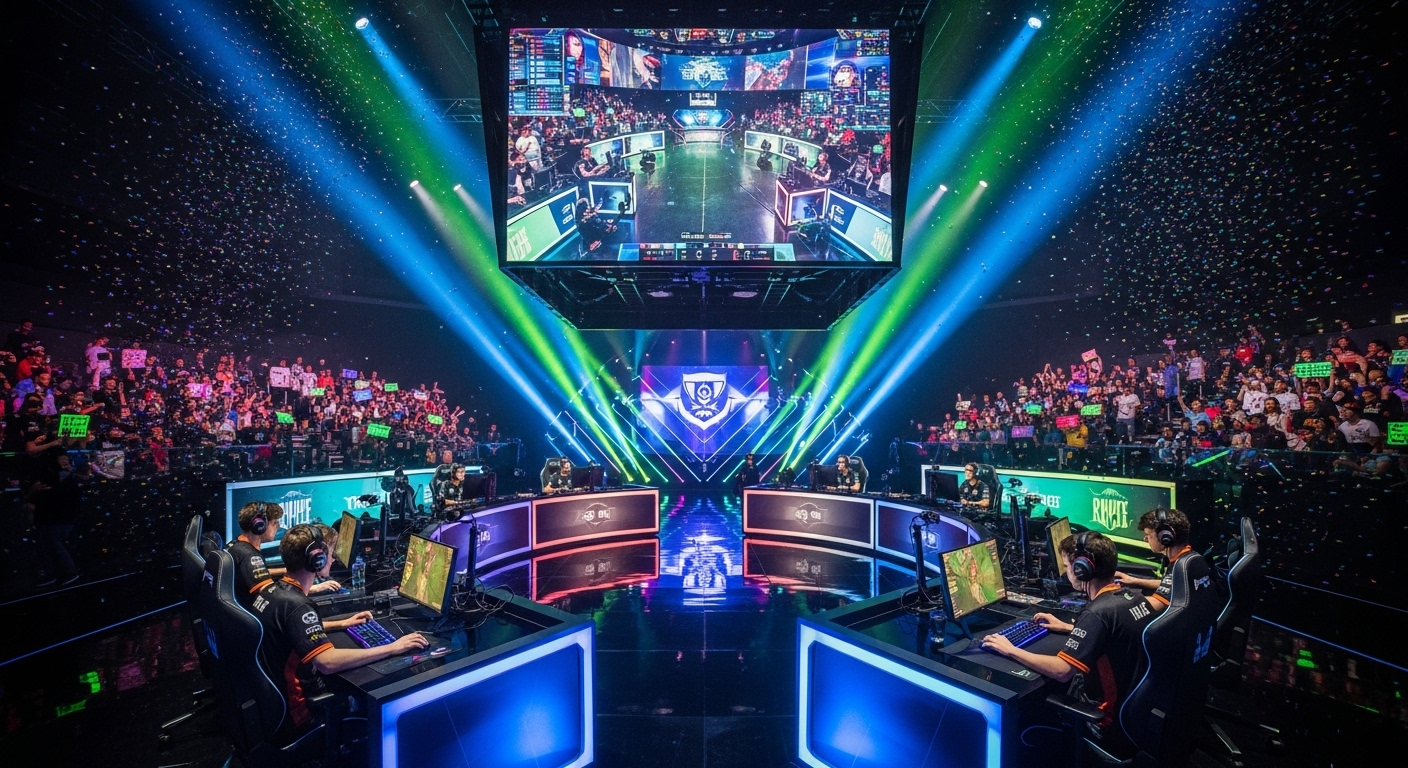
Introduction: The Rise of Esports
Esports, or competitive gaming, has grown from a niche hobby into a global powerhouse in entertainment. What was once limited to small gatherings of dedicated players has now become a billion-dollar industry, attracting millions of viewers, professional athletes, and international tournaments. This transformation highlights how gaming has evolved beyond casual play into a professional, competitive, and highly engaging form of entertainment. Esports is not just about playing games; it is a culture, a career, and a spectacle that captivates audiences worldwide.
The Origins of Competitive Gaming
The roots of esports can be traced back to the late 1970s and 1980s with arcade tournaments and early console competitions. Players competed in games such as Space Invaders, Pac-Man, and Street Fighter, often meeting at local arcades or LAN (Local Area Network) events. These early competitions were informal, yet they laid the groundwork for competitive gaming as a structured activity.
As gaming hardware advanced and video games became more complex, competitive play evolved into organized events. Players began forming teams, practicing strategies, and participating in small tournaments. This period established the foundation of esports, demonstrating that gaming could be competitive, skill-based, and socially engaging.
The Internet Revolution and Global Connectivity
The advent of the internet in the 1990s transformed esports. Online multiplayer games allowed players to compete with opponents across the globe, breaking geographic boundaries. Titles like Counter-Strike, StarCraft, and Quake created competitive communities that thrived online. Players could refine their skills, join teams, and participate in leagues without being physically present.
Global connectivity also made esports a spectator experience. Fans could watch matches, follow strategies, and celebrate victories in real-time. Online streaming platforms began to emerge, allowing tournaments and gameplay to reach massive audiences. This shift marked the beginning of esports as a worldwide phenomenon, connecting players and fans from different cultures and backgrounds.
Professionalization of Esports
As esports grew in popularity, it became professionalized. Organizations began recruiting players, providing salaries, coaching, and training facilities. Teams developed structured strategies, studied opponents, and treated practice as a full-time commitment. Professional esports players now dedicate hours each day to improving skills, maintaining physical and mental fitness, and mastering communication with teammates.
Major tournaments began offering substantial prize pools, sponsorships, and media coverage. This professionalization helped legitimize esports as a career path and a form of entertainment comparable to traditional sports. Players are now recognized as athletes, celebrities, and influencers, and the teams they represent have devoted fanbases similar to football or basketball clubs.
The Spectator Experience in Esports
One of the defining aspects of esports is its appeal to spectators. Unlike traditional sports, esports offers interactive viewing experiences. Fans can watch live streams, receive commentary, and analyze strategies in real-time. The fast-paced gameplay, tactical depth, and unpredictable outcomes make esports an exciting spectacle.
Major esports events fill arenas and attract millions of online viewers simultaneously. The energy of live competitions, combined with fan engagement through social media and community platforms, creates a dynamic entertainment experience. Spectators not only watch but also interact, share predictions, and celebrate milestones alongside professional players.
Popular Esports Games and Genres
Esports encompasses a wide variety of games, each with unique mechanics and competitive appeal. Multiplayer Online Battle Arena (MOBA) games like League of Legends and Dota 2 emphasize teamwork, strategy, and objective control. First-person shooters such as Counter-Strike, Call of Duty, and Valorant require precision, reflexes, and tactical coordination.
Battle royale games, including Fortnite and Apex Legends, combine survival tactics with high-intensity action. Sports simulations like FIFA and NBA 2K replicate real-world sports and allow players to compete in familiar settings. This diversity ensures that esports appeals to a broad audience with varying interests, skill levels, and gaming preferences.
Esports Teams and Organizations
Professional esports teams function similarly to traditional sports franchises. Teams recruit talented players, provide coaching, and develop strategies tailored to specific games. Teamwork, communication, and synergy are crucial for success, as matches often hinge on coordinated efforts rather than individual skill alone.
Organizations also focus on branding, sponsorships, and fan engagement. Teams build loyal followings through social media, content creation, and fan events. The combination of competitive success and effective marketing has propelled esports into mainstream culture and contributed to its rapid growth worldwide.
The Economic Impact of Esports
Esports has developed into a multibillion-dollar industry. Revenue streams include tournament prize pools, sponsorships, advertising, merchandise, and media rights. Some tournaments now offer prizes exceeding millions of dollars, attracting top talent and generating global attention.
Brands recognize esports as an opportunity to reach younger, tech-savvy audiences. Sponsorships from technology companies, energy drinks, and lifestyle brands reflect the commercial appeal of competitive gaming. The economic influence of esports extends beyond players and teams, impacting advertisers, event organizers, and content creators across the globe.
Training and Professional Development in Esports
Top esports players train with the same intensity as traditional athletes. Training routines involve hours of practice, strategy development, and team coordination. Physical fitness, mental resilience, and communication skills are increasingly important for maintaining peak performance.
Coaches and analysts play a key role in professional esports. They study gameplay patterns, assess team strategies, and provide feedback to improve performance. This professional approach ensures that esports is more than just casual play—it is a serious, disciplined pursuit that requires dedication, skill, and strategic thinking.
Cultural Influence of Esports
Esports has a profound impact on culture. It shapes language, trends, and entertainment preferences, particularly among younger generations. Esports communities provide spaces for collaboration, creativity, and self-expression. Players and fans connect over shared interests, forming friendships and networks that transcend geographic and cultural boundaries.
Esports also inspires content creation, including streaming, video analysis, and commentary. Fans actively participate in discussions, memes, and fan art, further solidifying esports as a cultural phenomenon. The influence of esports extends beyond the screen, impacting social interaction, media, and lifestyle.
Global Expansion and International Competitions
Esports has become a truly global phenomenon. Countries in Asia, Europe, and North America have developed strong competitive scenes. South Korea, for example, is famous for its esports infrastructure and professional culture, while Western countries focus on streaming, content creation, and fan engagement.
International tournaments bring together players from around the world, promoting cross-cultural exchange and global competition. Global leagues, regional qualifiers, and world championships ensure that esports remains a truly international form of entertainment, celebrated by millions of fans worldwide.
Challenges Facing Esports
Despite its success, esports faces several challenges. Player burnout, mental health, and career longevity are major concerns due to rigorous training schedules and high-pressure environments. Regulatory issues, cheating, and maintaining fair play are ongoing challenges for the industry.
Additionally, esports must balance commercial growth with community engagement. While sponsorships and media deals drive expansion, maintaining authenticity and accessibility is essential to preserve the passion and trust of players and fans alike. Addressing these challenges is crucial for the sustainable growth of esports.
The Future of Esports
The future of esports is promising and full of potential. Technological advancements such as virtual reality, augmented reality, and artificial intelligence are set to transform gameplay and viewing experiences. Cloud gaming will make esports accessible to players without high-end hardware, broadening participation worldwide.
Integration with mainstream media, traditional sports, and entertainment will continue to expand esports’ reach. Innovations in game design, storytelling, and interactive experiences will enhance engagement for both players and spectators. The adaptability and creativity within esports ensure its relevance and growth for decades to come.
Conclusion: Esports as a Defining Force in Entertainment
Esports has evolved from humble beginnings into a global, professional, and culturally influential industry. It combines strategy, skill, teamwork, and entertainment in a way that engages players and spectators alike. Beyond competition, esports fosters communities, inspires creativity, and provides career opportunities for professional players.
As esports continues to grow, it redefines what it means to compete, spectate, and participate in digital entertainment. With global audiences, professional infrastructure, and technological innovation, esports is more than a trend—it is a defining force in modern culture, shaping the future of entertainment and competition.