
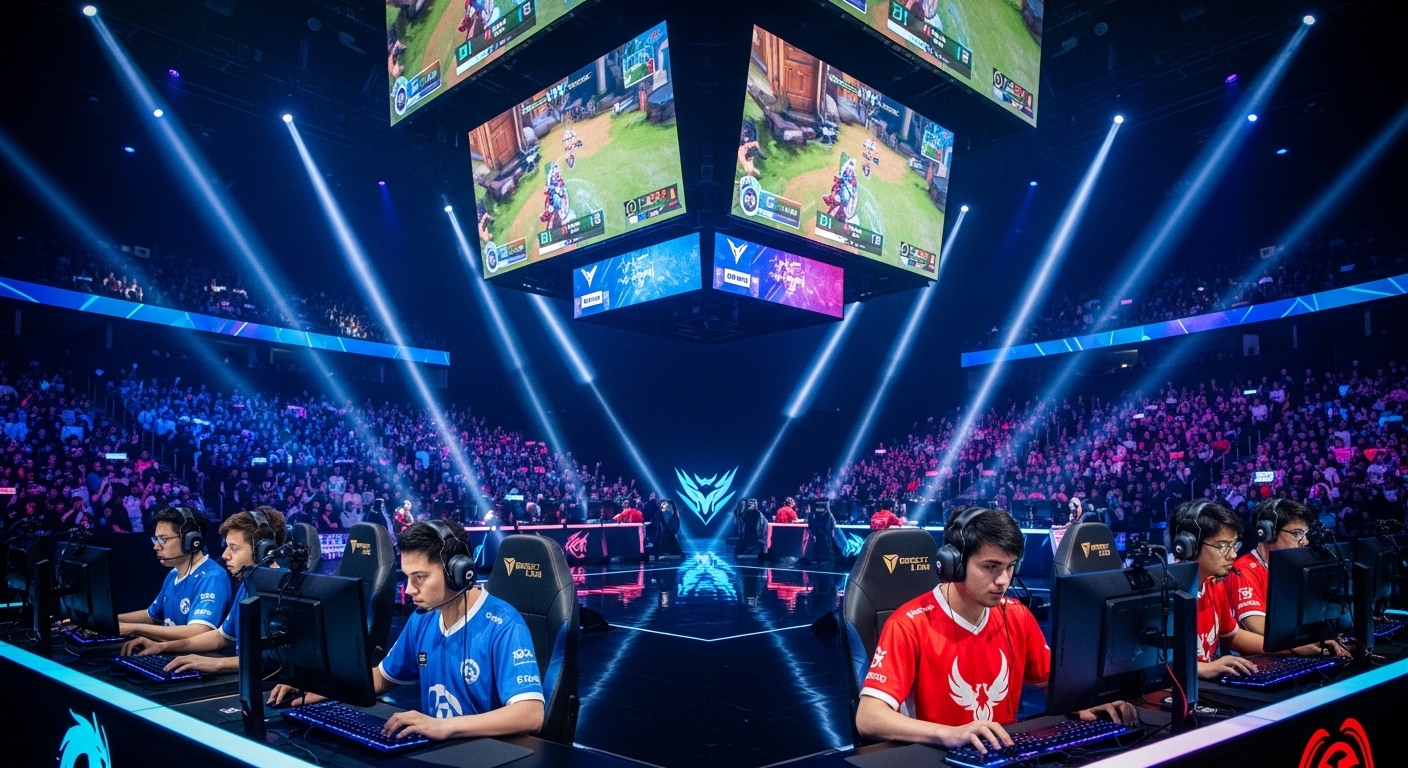
Esports, or competitive video gaming, has evolved over the last few decades from a niche hobby to a global phenomenon, attracting millions of viewers and generating billions of dollars in revenue. As video games have grown in popularity, so has the competitive side of gaming, leading to the development of professional leagues, major tournaments, and a new breed of superstars. In this blog post, we will explore the history of esports, its rise to prominence, its current state, and the future possibilities for this rapidly growing industry.
The Origins of Esports
Esports traces its roots back to the 1970s and 1980s, when the first competitive video game events began taking place. However, it wasn’t until the late 1990s and early 2000s that the foundation for the modern esports scene began to take shape.
The Early Days: 1970s to 1990s
The first known esports competition took place in 1972, when Stanford University hosted the “Intergalactic Spacewar Olympics” for the game Spacewar. Though the event was small, it set the stage for future gaming competitions. During the 1980s, arcade games like Pac-Man and Donkey Kong became popular, but they did not yet have the competitive scene that would later define esports.
In the 1990s, the rise of personal computers and the internet opened up new possibilities for gaming. The release of Doom in 1993 allowed players to compete against each other over local area networks (LAN), and the launch of Warcraft and Starcraft in the late 1990s further accelerated the competitive gaming scene. However, it wasn’t until the late 1990s and early 2000s that organized esports competitions began to gain traction, largely due to the growth of online gaming and the increasing popularity of games like Quake, Starcraft, and Counter-Strike.
The Dawn of Modern Esports: Early 2000s
The early 2000s marked a pivotal moment for esports, as organized tournaments and leagues began to form. In 2000, the Cyberathlete Professional League (CPL) was founded, hosting the first Counter-Strike tournaments. The CPL quickly became one of the most prestigious esports leagues in the world, attracting top-tier players from around the globe. Similarly, the World Cyber Games (WCG) was founded in 2000, with the goal of creating a global esports competition that would rival the Olympic Games.
Around the same time, South Korea emerged as a hotbed for competitive gaming. The release of Starcraft in the late 1990s sparked a national obsession with the game, leading to the creation of professional gaming teams and tournaments. The Korean government even supported the growth of esports by funding infrastructure, such as gaming cafes, which allowed people to play games like Starcraft and Warcraft in a competitive environment. By the mid-2000s, South Korea had become the epicenter of esports, with televised competitions and professional leagues drawing huge audiences.
The Rise of Streaming and Online Platforms
While esports was thriving in certain regions, its global reach remained limited until the late 2000s and early 2010s, when the advent of streaming platforms like Twitch revolutionized the industry.
The Birth of Twitch
Twitch, launched in 2011, became the first major platform for live streaming esports competitions. Before the launch of Twitch, esports events were often broadcasted on niche websites or through poorly supported channels. Twitch, however, provided a user-friendly platform for gamers to stream their gameplay and for fans to watch competitive gaming events in real-time.
The rise of Twitch allowed esports to reach a much larger audience, as viewers could now watch their favorite games and players from anywhere in the world. Additionally, Twitch introduced interactive features, such as live chat, allowing fans to engage with each other and with streamers during broadcasts. This interactivity fostered a sense of community and helped to build esports’ growing fanbase.
The Role of YouTube and Other Platforms
While Twitch became the dominant platform for esports streaming, other platforms like YouTube, Facebook Gaming, and Mixer (which was later acquired by Facebook) also played important roles in the growth of the industry. YouTube, in particular, provided a platform for esports highlights, game reviews, and professional player content, allowing fans to engage with esports on-demand.
In addition to streaming, YouTube’s algorithm helped promote esports content to a broader audience, introducing new fans to the scene. The rise of streaming and content creation allowed a new generation of esports influencers to emerge, with top streamers and players garnering millions of followers and creating a new type of celebrity within the gaming world.
Esports Today: A Global Multi-Billion Dollar Industry
In recent years, esports has transformed into a global, multi-billion dollar industry, with professional leagues, large-scale tournaments, and corporate sponsorships propelling the scene to new heights.
Professional Leagues and Tournaments
Esports tournaments have grown exponentially in size and scale, with some events now drawing millions of viewers and offering multi-million-dollar prize pools. Popular games like League of Legends, Dota 2, Fortnite, Counter-Strike: Global Offensive, and Call of Duty now have dedicated professional leagues that feature top-tier players and teams from around the world.
The League of Legends World Championship, for example, is one of the biggest esports events globally, with millions of viewers tuning in to watch the best teams from various regions battle it out for the title. In 2020, the event had a peak viewership of over 3.8 million concurrent viewers. Similarly, The International, the annual Dota 2 tournament, offers a prize pool that has often surpassed $30 million, making it one of the largest prize pools in the history of esports.
Sponsorships, Advertising, and Media Deals
As esports has grown in popularity, it has attracted the attention of major brands and corporations, eager to tap into the massive audience of gamers and esports fans. Sponsorship deals have become a key revenue stream for professional esports teams and tournaments, with companies like Intel, Coca-Cola, and Red Bull investing heavily in the industry.
Media deals have also played a significant role in esports’ growth. Major broadcasting companies, including ESPN, TBS, and BBC, have begun to air esports events, bringing the competitions to mainstream audiences. Additionally, platforms like Twitch and YouTube offer live-streaming services that reach millions of people around the world.
The Growth of Esports Viewership
Esports viewership has skyrocketed in recent years, with millions of fans tuning in to watch professional players compete in major tournaments. According to Newzoo’s Global Esports & Live Streaming Market Report, the global esports audience is expected to reach 577 million people by 2024, with an estimated revenue of $1.08 billion. This growth has been driven by the increasing popularity of streaming platforms, as well as the rise of mobile esports and the availability of esports content on platforms like YouTube and Facebook Gaming.
The Emergence of Mobile Esports
One of the most significant trends in the esports industry in recent years has been the rise of mobile gaming. With the proliferation of smartphones and mobile internet access, mobile esports has become a major part of the competitive gaming landscape. Games like PUBG Mobile, Mobile Legends, and Free Fire have attracted large, dedicated player bases and have been the focus of several major tournaments and leagues.
Mobile esports offers a more accessible entry point for players and fans, as it does not require expensive gaming PCs or consoles. Additionally, mobile esports has seen rapid growth in regions like Southeast Asia, India, and Latin America, where mobile gaming is the dominant form of gaming.
The Future of Esports: What Lies Ahead?
As esports continues to evolve, there are several exciting developments and trends to watch out for in the coming years.
The Potential for Mainstream Acceptance
Esports has already made significant strides in becoming mainstream, but its full potential has yet to be realized. One of the biggest hurdles that esports faces is gaining full recognition as a legitimate sport. However, as esports continues to gain recognition in universities, high schools, and even the Olympics, it is likely that the industry will continue to move closer to full mainstream acceptance.
In the future, esports could become a regular feature on television networks, with major sports channels broadcasting tournaments alongside traditional sports. Additionally, as gaming becomes increasingly integrated into popular culture, esports could become as commonplace as watching traditional sports.
The Rise of Virtual Reality and Augmented Reality in Esports
Virtual reality (VR) and augmented reality (AR) technologies have the potential to revolutionize esports, offering players and spectators entirely new experiences. VR could provide a fully immersive experience for players, allowing them to interact with their virtual surroundings in a way that traditional gaming cannot replicate. Similarly, AR could offer fans new ways to engage with esports content, such as watching tournaments from different angles or interacting with players in real-time.
While VR and AR technologies are still in their infancy, they could have a major impact on the esports industry in the coming years.
The Expansion of Esports to New Regions
As mobile gaming continues to grow in popularity, esports is expanding rapidly in regions like Southeast Asia, Africa, and Latin America. These regions, which have large populations of young, tech-savvy individuals, are expected to become major hotspots for esports in the coming years. With more access to high-speed internet and affordable mobile devices, players from these regions are now able to participate in competitive gaming and view esports content.
This expansion is not only beneficial for the global esports scene but also for the development of new talent and the diversification of esports culture. As these regions continue to grow in importance, they will play a key role in shaping the future of the industry.
Conclusion
Esports has come a long way since its humble beginnings in the 1970s. Today, it is a multi-billion-dollar industry with millions of fans around the world. The growth of streaming platforms, the rise of mobile gaming, and the increasing presence of esports in mainstream media have all contributed to the success of the industry. Looking ahead, esports is poised for even greater success, with new technologies like virtual reality and augmented reality offering exciting possibilities for the future.
As the esports industry continues to evolve, one thing is certain: competitive gaming is here to stay. Whether you’re a casual gamer, a competitive player, or a fan, there has never been a better time to be part of the esports world. The future is bright, and the best is yet to come.